

The Skilled Labor Shortage Isn't Just a Hiring Problem. It's a Service Problem.
The shortage of skilled tradespeople has been building for years. Now, with experienced workers retiring, fewer people entering the trades, and new industries competing for the same talent, the pressure is intensifying.
According to Associated Builders and Contractors, the construction industry needs an estimated 349,000 additional workers in 2026, with demand expected to increase in 2027. A recent survey by the Associated General Contractors of America found that 88% of construction firms with openings for skilled trades workers said those positions were as difficult or more difficult to fill than a year ago.
The challenge extends to property maintenance, too. The U.S. Bureau of Labor Statistics projects approximately 148,700 openings annually for general maintenance and repair workers through 2035, many driven by retirements and workers leaving the field.
For property and community management companies, finding and retaining qualified maintenance professionals is increasingly difficult. But filling vacancies is only part of the challenge. The larger question is whether companies are developing people who can deliver the level of service residents, homeowners, and property owners expect.
Technical Skills Are Only Part of the Job
Property maintenance requires a different combination of capabilities than many traditional trades. An electrician may specialize in electrical systems and a plumber in plumbing, but a service professional working in multifamily housing or other managed communities needs a broader understanding of building systems and the ability to handle a wide variety of maintenance issues.
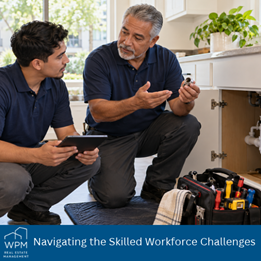
Service professionals also represent the management company every time they interact with residents or homeowners. A technician may be highly qualified to repair an HVAC system, but that doesn't automatically mean they understand the expectations that come with serving people. How they communicate, respect the property, respond to concerns, and follow through can make the difference between a completed repair and a positive service experience.
For owners, this matters because maintenance is one of the most visible expressions of a management company's performance. Residents and homeowners may have limited interaction with company leadership, but they experience its service standards firsthand through maintenance work.
Even a repair completed correctly can leave a poor impression if the technician fails to communicate or treats the home carelessly. Over time, those experiences shape how people perceive their community and the management company responsible for it.
Building the Workforce Rather Than Just Competing for It
At WPM, developing talent internally has been a longstanding priority, well before the current labor shortage.
In 2015, WPM introduced FLITE (Future Leaders in Training for Excellence) to help associates develop their leadership capabilities and prepare for increased responsibilities. A year later, WPM launched SMART (Service Mentoring and Response Training), a 12-month program that helps maintenance and service technicians develop the management, service, and customer relations skills needed to advance into leadership positions. Both programs reflect WPM’s broader commitment to developing people who understand the responsibilities of property management and the expectations that come with delivering service excellence.
WPM looks for candidates with foundational technical abilities and the right attitude toward serving others, then provides opportunities to strengthen their skills through training and hands-on experience. The company also works with local trade schools, high schools, and colleges to help introduce people to career opportunities in property maintenance.
WPM's Maintenance and Construction Services division provides another avenue for developing talent. Employees can gain experience across different property types, expand their technical knowledge, and move into divisional service roles as their capabilities grow.
The approach has produced results. Through SMART, more than 30 technicians have advanced into service management positions, with at least a dozen still at WPM today. Some are among the company's most experienced service managers.
What Owners Should Expect from Their Management Company
No management company is immune to today's labor pressures, and outside contractors will always play an important role in community operations. But owners should look beyond whether their management company can fill today's open positions.
How is the company developing its next generation of service professionals? What standards guide their interactions with residents and homeowners? And how is it preparing people to take on greater responsibilities as experienced employees retire or move into other roles?
The answers speak to a management company’s ability to deliver consistent service over time.
For WPM, developing talent internally helps retain institutional knowledge and build a pipeline of experienced professionals who understand the communities they serve. It also creates opportunities for employees to build long-term careers, supporting continuity as the company grows.
Equally important, WPM develops service professionals around a shared understanding of what it means to care for a community and the people who live there. That includes recognizing maintenance concerns before they become larger problems, treating homes with respect, and understanding how everyday service interactions influence resident and homeowner satisfaction and a community’s reputation.
For owners, the value is having a management partner that invests in the people and capabilities needed to protect their assets and deliver dependable service over time.
The skilled labor shortage may be driving today's headlines, but workforce development shouldn't be a reaction to a labor crisis. It should be part of how a management company operates, and something every property owner expects from the company entrusted with caring for their investment.