
Posts about Maintenance

Why the Life Cycles of Major Building Systems Matter-image

Roofs, boilers, HVAC systems, plumbing infrastructure, pools, access control systems, and other major building components are easy to take for granted when they are working properly. But when one of these systems fails, the impact can be significant.   A leaking roof can cause interior damage. A boiler or hot water system failure can disrupt residents. An aging HVAC system can affect comfort, efficiency, and operating costs. A failing pool, outdated fitness center, or aging amenity can shape how residents, homeowners, and prospective renters experience the community.   These systems also come with real costs. Major components can range from tens of thousands of dollars to several hundred thousand dollars. When those expenses are anticipated, owners and boards have more options. When they are not, decisions often have to be made quickly, under pressure, and with fewer choices.   From Reactive Repairs to Proactive Planning Every major building component has a useful life. The question is not whether a roof, boiler, chiller, or access system will eventually need repair or replacement. The question is whether the property team, owner, or board understands where that system is in its life cycle and has a plan for what comes next.   A proactive approach allows property owners and Association boards to look ahead, prioritize needs, and make more informed decisions. Instead of responding only when something breaks, they can assess current conditions, estimate remaining useful life, evaluate options, and plan for future work.   That planning matters because emergency repairs are rarely ideal. When a system fails unexpectedly, the immediate need is often to restore service as quickly as possible. That can mean paying a premium, accepting whatever equipment or materials are available, or delaying other planned work to fund the emergency.   Proactive planning reduces the likelihood of being caught off guard.   Protecting Financial Performance and Property Value For multifamily owners, major building systems are directly connected to both asset value and financial performance. A property that is well maintained is better positioned to operate efficiently, support resident satisfaction, and protect long-term value.   For Association boards, the same principles apply in a different financial structure. Boards are responsible for protecting the community’s common elements and preserving the value of homes in the community. When major expenses are not properly anticipated, the financial burden may show up through reserve funding challenges, fee increases, special assessments, or delayed projects.   Reserve studies are an important planning tool for Associations. They help identify major common-area components, estimate future costs, and support responsible long-term funding. But a reserve study is only one part of the process. Boards also need practical guidance to translate that information into action: What needs to happen first? Are the cost estimates still realistic? What should be repaired, replaced, or monitored? What vendors are needed? How should the project be scoped, bid, scheduled, and managed?   That is where experienced management and construction support can add significant value.   Looking Beyond the Obvious Systems When people think about major building systems, they often think first about roofs, HVAC, plumbing, boilers, chillers, siding, brick, gutters, and other visible or mechanical components. Those are all important. But a comprehensive life cycle approach may also include amenities and property features that influence the resident or homeowner experience.   Pools, fitness centers, laundry rooms, clubhouses, dog parks, access control systems, call boxes, fencing, lighting, and other shared features all require ongoing maintenance, eventual replacement, or periodic upgrades. Understanding the condition and priority of these components helps owners and boards make better decisions about where to invest first. A replacement project may need to be phased over several years to align with funding.   The Role of Expertise Effective life cycle planning requires more than a checklist. It requires knowledge of building systems, construction management, vendor coordination, budgeting, operations, and the realities of maintaining occupied properties and active communities.   WPM’s Maintenance & Construction Services team brings that perspective to help clients think more proactively about their properties. On the multifamily side, WPM’s ISSEE program, which stands for Inspection of Safety Systems, Envelope and Environment, is one example of how the team documents key systems and components, assesses condition, and helps clients better understand future needs.   For Associations, WPM’s expertise can help boards take the information in a reserve study and turn it into a practical plan. That may include reviewing priorities, developing scopes of work, obtaining vendor input, refining budgets, coordinating bids, and helping oversee projects.   Planning Today for Tomorrow’s Needs Major building systems will always require investment. The difference is whether those investments are planned, prioritized, and aligned with the goals of the property or community.   By understanding the life cycle of key components, owners and boards can better manage costs, protect property value, reduce disruption, and make decisions with greater confidence. Working with a management partner that understands building systems, budgeting, and project execution can help turn long-term needs into actionable plans.   That proactive approach is not just good maintenance. It is a smarter way to protect the asset, support the people who live there, and create performance that adds value.

Read more
Spring Property Inspections: How Proactive Management Protects Communities-image

As winter gives way to spring, property managers have an important responsibility to take a fresh look at the communities in their care. Months of snow, freezing temperatures, and winter storms can quietly create issues that may not be immediately visible.   At WPM, this seasonal transition is a natural point in the annual management cycle to evaluate how each community has weathered the winter months and identify what needs attention before the busy spring and summer seasons begin. Taking this proactive approach helps protect the condition and long-term value of the community.   Conducting a Comprehensive Walk-Through WPM’s property managers and on-site maintenance teams begin with a thorough walk-through of each community. Using structured inspection checklists developed through years of experience, teams systematically evaluate the condition of the community and identify areas that may need attention.   These inspections typically include reviewing: Building exteriors, siding, and windows Parking areas, curbs, and sidewalks Lighting and community signage Landscaping and drainage areas Community infrastructure such as fencing, railings, and retaining walls Common areas and outdoor amenities, such as dog parks, walking paths, and playgrounds   For both multifamily properties and association communities, this walk-through provides a clear picture of the property’s condition and helps identify priorities for the months ahead.   Addressing Winter Damage Early Once temperatures rise, WPM teams often discover issues that emerged over the winter months. Snow removal equipment, freezing temperatures, and ice buildup can create wear and tear that only becomes visible as conditions improve.   Inspections frequently uncover issues such as clogged gutters, cracked concrete, landscaping damage, or loose exterior components. Addressing these items early helps protect what property professionals refer to as the building envelope—the exterior elements that keep water and weather out of a structure. Even small issues, such as blocked gutters or failed window sealing, can allow water intrusion and lead to more significant repairs if left unchecked.   Preparing Systems and Infrastructure for the Season Spring is also the time to ensure mechanical systems and infrastructure are ready for the months ahead. Before summer temperatures arrive, WPM teams begin testing and servicing air conditioning systems and other equipment so potential issues can be resolved before peak demand.   Seasonal preparation often includes: Starting up air conditioning systems Cleaning coils and replacing filters Inspecting drainage lines and condensate systems Testing equipment performance   At the same time, teams review other infrastructure that supports daily operations, including lighting systems, storm drains, fire hydrants, walkways, and playground equipment.   Water management is a particular focus during this time of year. Clearing debris from storm drains and drainage areas helps ensure water flows properly during spring rains and reduces the risk of flooding or property damage.   Maintaining Safety and Community Appearance Spring inspections also provide an opportunity to address safety concerns and refresh the community after the winter months.   Typical focus areas include: Repairing fencing or exterior features Painting curbs or signage Power washing common areas Preparing pools and outdoor amenities Refreshing landscaping and planting areas   These efforts help ensure the community is welcoming, safe, and well cared for as residents spend more time outdoors during the warmer months.   Turning Inspections into Action A spring inspection is only valuable if it leads to action.   Once issues are identified, WPM teams prioritize them based on safety, potential property damage, and seasonal timing. From there, a maintenance plan is developed that may involve on-site maintenance teams, WPM’s in-house Maintenance & Construction Services division, or trusted vendors and specialized contractors. Having these capabilities available ensures work is coordinated efficiently and completed by experienced professionals.   Taking this proactive approach reflects the mindset WPM brings to every community we manage. We treat each property with the same care and attention we would expect if it were our own. It’s part of our commitment to protecting the communities entrusted to us and delivering performance that adds value.

Read more
What Multifamily Owners Need to Know About Lead-Based Paint Disclosure-image

For owners of multifamily properties, regulatory requirements are part of the cost of doing business. Many are familiar, some are complex, and most require consistent execution to avoid unnecessary risk. Lead-based paint disclosure is one of those requirements where doing it right, every time, matters.   In established multifamily markets, a significant portion of housing stock predates 1978. Federal and state regulations require owners of most of these properties to disclose known information about lead-based paint and related hazards before a lease is signed. While the disclosure process itself is well-defined, the risk for owners typically lies not in the rule but in how it is managed day to day.   Disclosure as a risk management issue Lead disclosure requirements exist to reduce risk for both residents and for owners. From an ownership perspective, the exposure is primarily legal and financial. Federal law allows for significant penalties when required disclosures are missed or improperly handled, and enforcement actions often focus on documentation, timing, and record retention rather than intent.   In practice, disclosure-related issues tend to surface in predictable moments: audits, complaints, legal review, or ownership transitions. Inconsistent processes across a portfolio, incomplete records, or informal leasing practices can create gaps that are difficult to correct after the fact.   For owners, the key takeaway is straightforward: disclosure is not a one-time administrative task. It is an operational control that needs to function reliably across properties and leasing teams.   What owners should understand at a practical level At a high level, lead disclosure requirements are built around a few core expectations: Disclosure must occur before lease execution, and timing matters. Known information must be shared, including existing reports or records, where applicable. Acknowledgment and documentation are critical and must be retained for defined periods. Processes must be repeatable across units, properties, and markets.   State-specific requirements may add additional obligations, particularly for properties located in jurisdictions with more detailed lead paint laws. Owners operating across multiple states benefit from an approach that accounts for these variations without relying on ad hoc judgment at the site level.   Where risk tends to show up From an owner-risk standpoint, disclosure issues most often arise not because requirements are unknown, but because execution breaks down, particularly as portfolios grow, teams change, or processes evolve.   Common pressure points include: Leasing teams working from outdated forms Disclosure materials not being provided uniformly across properties Records that are incomplete or difficult to retrieve Growth or turnover that outpaces process updates   These gaps can increase exposure even for otherwise diligent owners. The operational challenge is ensuring that disclosure is embedded into leasing workflows in a way that holds up over time.     LEAD DISCLOSURE: COMMON MISCONCEPTIONS   Disclosure does not automatically require testing. It focuses on sharing known information and required materials, not creating new reports. Disclosure does not signal that a property is unsafe. Many well-managed, older communities comply fully with disclosure requirements. Disclosure is not a one-size-fits-all. Requirements may vary by state and sometimes by property type or tenancy circumstances. Disclosure works best when it is part of the leasing process. Treating it as an afterthought is where risk tends to surface. Transparency builds trust Disclosure is not a warning sign for residents, but rather information. Residents who receive clear, timely disclosures are less likely to assume information is being withheld or minimized. Clear, timely disclosure helps set expectations and reduces misunderstandings at the outset of the lease.     This transparency often translates into smoother leasing, stronger resident relationships, and fewer disputes. But its primary value remains risk reduction and consistency.   The role of a disciplined management approach For many owners, the challenge isn’t understanding that disclosure is required; it’s managing the details consistently across properties, teams, and jurisdictions. That’s where the right property management partner adds value.   Effective managers treat disclosure as part of routine operations, not a standalone task. They act as a guide, helping owners understand what matters, where risk tends to surface, and how to maintain alignment without overcomplicating the process. That means: Monitoring regulatory changes so owners are not caught off guard Creating consistency across properties and leasing teams Maintaining documentation that is accessible, complete, and defensible   This disciplined approach reduces friction during audits, legal review, or ownership changes and helps protect owners from avoidable exposure.   A quiet but important differentiator Lead paint disclosure may never be a headline issue for most multifamily properties, but it remains an important part of responsible ownership. Consistent, well-documented disclosure processes reduce liability and support operational stability.   Done well, disclosure also builds confidence: confidence for owners that the details are being handled thoughtfully, and confidence for residents that they are renting in a professionally managed community.   Owners reviewing disclosure processes across their portfolios may benefit from a structured compliance review to ensure consistency across markets. Contact WPM to discuss how we help owners manage compliance with a disciplined, repeatable approach.

Read more
Maintaining Aging Communities-image

  How Proactive Planning Protects Safety, Value, and Long-Term Performance   As communities age, their needs evolve. Roofs approach the end of their useful life, mechanical systems show signs of stress, and small issues that once seemed insignificant begin to carry bigger consequences. Whether you’re a multifamily owner or part of a homeowner or condominium association, caring for aging buildings requires more than responding to urgent problems. It requires a proactive, informed, and strategic approach to maintenance and capital planning.   At WPM, we see the same truth play out across all types of communities: Long-term building health is determined by how well you plan for it.   The communities that thrive are the ones that evaluate their assets regularly, understand lifecycle expectations, anticipate needs, and take steps early—before issues escalate into expensive failures.   The Core Principles: What Every Aging Community Needs   Start with intent and a realistic budget. Every effective maintenance plan starts with one question: What is the board, homeowner group, or owner trying to achieve? That intent shapes everything else, from what can be addressed now, to what must wait and what can be phased over three to five years.   This step also forces clarity between non-discretionary work (roof replacement, boilers, failing mechanical systems) and discretionary improvements (unit renovations, amenity or common area upgrades). It’s the difference between “must-do” and “nice-to-have”—a distinction that becomes crucial as buildings age and capital dollars need to stretch further.   Look for early signals before they become big problems. Preventive maintenance isn’t about responding more quickly. It’s about seeing the issue before it becomes a problem. During quarterly or seasonal walks, WPM teams look for: Roofline concerns (for condo and multifamily buildings) Clogged or misaligned gutters Downspouts draining back toward buildings Water stains or signs of leaks Cracks or settlement around foundations Overflowing trash areas Exterior lighting issues Safety system irregularities Mechanical rooms showing early warning signs   These issues may seem small, but each one is an early sign of something bigger. Ignoring them could compound long-term damage.   Strengthen preventive maintenance routines. Routine tasks may feel simple, but they are the backbone of extending the life of building systems. This includes changing HVAC filters regularly, checking smoke detectors and life-safety equipment, ensuring heat is reaching mechanical rooms in the winter, and conducting regular and after-hours lighting audits, among other things. In an aging community, these smaller touchpoints prevent larger—and more expensive—repairs down the road.   Be thoughtful about what’s done in-house vs. outsourced . There was a time when maintenance teams tried to do everything themselves. But with aging buildings, more complex systems, and increased technology integration, doing everything in-house often creates more deferred maintenance—not less.   Today’s best practice is a hybrid model: Use onsite teams where it makes sense and outsource specialized work or time-consuming projects, such as major roofing projects or large-scale mechanical replacements. This ensures quality, reduces long-term cost, and keeps the onsite team focused on areas that matter most.   Use data to drive decisions—not just experience or intuition. Owners and boards make the best decisions when they have a clear, data-driven understanding of the condition of their community. This is where reserve studies, architectural inspections, and tools like WPM’s Inspection of Safety Systems, Envelope, and Environment (ISSEE) process become invaluable.   For Community Associations: Planning for Aging Shared Assets   Community Associations vary widely, from single-family HOAs with modest shared amenities to condominium communities with extensive building envelopes and complex mechanical systems. Their maintenance plans must reflect those different scopes.   For HOAs, responsibilities typically focus on exterior and shared amenities rather than individual homes. This often include things like: Clubhouses Pools & fitness facilities Playgrounds Exterior lighting Stormwater systems Private roads and sidewalks Landscaping and irrigation Other shared amenities   These are assets that age just like any other part of a community, and they often require more attention as they approach the end of their lifecycle.   For condominium associations, boards may also have a broader set of responsibilities, including: Roofs Siding and exterior materials Hallways and shared interior spaces Common mechanical rooms Shared plumbing risers Fire suppression systems Building envelope performance   Because the scope is broader, so is the potential risk, placing even greater importance on early planning.   Reserve studies provide community associations with essential information to help understand the lifecycle of various assets within a community. However, reserve studies alone rarely guide boards on how to execute the work. Too often they are left with long lists of expensive projects, large multi-year cost estimates, pressure to raise fees, and no roadmap for what to do first, what can wait, or how to stay ahead of failures.   Many communities without internal maintenance support rely on individual contractors (roofers, plumbers, landscapers) to guide their capital planning. However, this can lead to biased or incomplete recommendations. WPM provides independent, objective expertise, helping boards translate their reserve study into a realistic, financially responsible, multi-year plan—one that prioritizes needs, aligns with available funds, and protects long-term property value.   For Multifamily Owners: Managing Aging Buildings Inside and Out   Multifamily properties face a different challenge: owners are responsible for everything inside and outside the buildings, from structures and systems to common areas and unit interiors.   Unlike Associations, multifamily communities don’t employ external reserve specialists. In many ways, WPM fills that role for owners by evaluating building systems, identifying lifecycle needs, and developing the long-range capital strategies typically found in a reserve study. This means WPM evaluates the full condition of the asset and helps owners identify the right mix of investments needed to maintain long-term performance, which typically includes: Must-do infrastructure needs Lifecycle-driven mechanical replacements Preventive upgrades Unit renovations Amenity improvements   Beyond assessing systems and identifying capital needs, WPM partners with owners to align these priorities with their long-term goals for the property. This includes understanding timing around capital cycles, refinancing, and value-add opportunities so investments are made strategically and not simply in response to failures. By approaching maintenance this way, owners can protect asset value, plan ahead with confidence, and avoid the surprises that often come with aging buildings.   Part of WPM’s maintenance planning is its Inspection of Safety Systems, Envelope, and Environment (ISSEE) process, a top-to-bottom assessment designed specifically for multifamily communities. This detailed assessment: Evaluates physical condition and building systems Identifies deferred maintenance Provides budget ranges for future capital spending Helps owners plan for large projects (like roofs, mechanical systems, and safety systems) Fills the gap between acquisition/refinance assessments Supports better decision-making and long-term asset preservation   Together, these insights give owners a deeper understanding of where the property stands today and what is likely to require attention in the coming years. Rather than relying on assumptions or waiting for systems to fail, owners have a clear, evidence-based foundation for planning major investments at the right time and in the right sequence.   The Future Belongs to Communities That Plan Ahead   Aging communities face many pressures, including tight budgets, rising costs, complex systems, and the natural wear that comes with time. But with thoughtful planning, proactive maintenance, and access to the right expertise, they can avoid costly surprises and ensure safe, stable, well-maintained environments for years to come.   Whether through reserve study interpretation, architectural inspections, 10-year capital planning, or tools like the ISSEE process, WPM helps communities move from reacting to problems as they arise to anticipating them, protecting both the physical property and the people who call it home.  

Read more
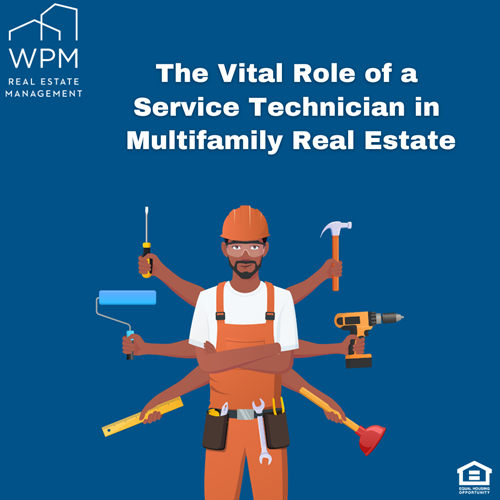
The Vital Role of a Service Technician in Multifamily Real Estate-image

In the multifamily real estate industry, service technicians play a critical role in ensuring that apartment communities run smoothly and efficiently. Often described as the "jack of all trades," this is an understatement. These professionals need a diverse skill set that includes basic knowledge of electricity, plumbing, and HVAC systems. Their ability to tackle a wide range of maintenance issues makes them indispensable to property management teams.   In addition to routine maintenance issues, service technicians also handle preventive tasks, like changing HVAC filters, clearing dryer vents, and cleaning gutters. Their work helps avoid the need for costly repairs and replacements. Service technicians and the entire service team also play an important role in resident satisfaction, which affects the community’s overall success. Satisfied residents stay longer, reducing turnover and marketing expenses for the property.   Daily Responsibilities Service technicians are responsible for a myriad of maintenance tasks within an apartment community. Their day typically starts with a list of work orders assigned by the service manager, who is also a working manager tackling their own set of work orders. These tasks can include:   - Fixing defective outlets, switches, light fixtures, and faucets - Diagnosing and repairing stove and other appliance issues - Replacing fixtures and appliances - Unclogging drains in tubs, sinks, and toilets - Repairing cabinetry and replacing sinks - Caulking and tile replacement in bathrooms and kitchens   No two days are alike for a service technician. One day might be spent entirely on plumbing issues, while the next could be dedicated to HVAC repairs. The workload can vary significantly, with some tasks taking just an hour and others, like major HVAC repairs, potentially consuming an entire day. This variety requires technicians to be flexible and quick to adapt to changing priorities.   In addition to routine maintenance, service technicians are also on call for emergencies. Depending on the size of the property, they might be on an emergency call rotation, ensuring that urgent issues are addressed promptly. This on-call duty requires technicians to be adaptable and ready to handle any situation that arises, often making them the first point of contact for residents facing maintenance problems. Service technicians are often offered reduced rental rates to live at the property or another nearby property in the company’s managed portfolio to help ensure faster response times to emergencies.   Training and Skill Development Training is also a key component of a service technician's day. WPM has developed a robust approach to maintenance and service training, helping technicians strengthen their skills and experience. In-field training allows new technicians to learn on the job from more experienced professionals, and regular training sessions help all team members stay updated on the latest maintenance techniques and safety protocols. Through this continual learning environment, service technicians gain the skills, experience, and confidence to handle a wide range of service and maintenance issues. Additionally, our 12-month Service Mentoring And Response Training (SMART) program is designed to give rising team members the skills to successfully move into leadership positions within the organization.   Career Growth Opportunities Entry-level technicians should have a basic understanding of electricity, plumbing, and appliance repair. Over time, they can expect to gain advanced skills through on-the-job training and additional courses. The role also requires strong people skills, as technicians often interact with residents, addressing their concerns and ensuring their satisfaction.   For those interested in expanding their skill set and advancing their career, there are multiple opportunities for growth. Technicians can advance to assistant service manager and service manager positions at a single property and eventually to a senior area service manager role, overseeing maintenance needs of multiple properties and managing larger teams. There is no set timeline for these promotions; progression depends on individual effort and acquired skill sets.   ---------------- “Being a Service Technician opened my mind to new perspectives and fueled my desire to help others. Each day brings new learning opportunities, and I am grateful for the chance to share my knowledge while continually expanding it.” – Frank Rocco, Service Manager, WPM Real Estate Management (promoted from Service Technician) ----------------   Preparing for the Role For those interested in becoming a service technician, technical schools offer valuable training in essential skills like electricity, plumbing, and HVAC systems. For those who cannot afford formal education, starting as a site technician at a property provides a pathway to gain experience and learn about working in property management service. Some companies, like WPM, also offer in-house training and mentorship programs, allowing new hires to develop their skills and advance their careers.   Final Thoughts The role of a service technician in multifamily real estate is both challenging and rewarding. It requires a versatile skill set, adaptability, and a willingness to continuously learn and improve. For those who enjoy a dynamic work environment and the satisfaction of solving problems, this career offers numerous opportunities for growth and development.   Interested in a career in multifamily property management service? Visit https://www.wpmllc.com/careers   to explore the opportunities at WPM Real Estate Management and join our team of quality service professionals.   

Read more
The Goldilocks Principle: Maintenance Advantages of the Right-Sized Property Management Company-image

For multifamily real estate owners and community association boards, selecting a property management firm can be quite an undertaking. It’s a fragmented market – everything from small, owner-operator managers with one or two employees who “do it all” to huge, national and international companies that manage billions of dollars of real estate and thousands of communities.  While there are pros and cons to each, one area that is often overlooked during due diligence in choosing a property manager is how a company’s size affects its maintenance operations.   Major national operators have untold lists of vendors, often vetted through a procurement process that can be bureaucratic. Depending on the location of the property or the type of service needed, vendor bids are reviewed and selected by individuals who may or may not have even stepped foot on the property. On the other end of the spectrum, small operators often lack the size to attract larger vendors or competitive pricing, opting to funnel work through a handful of smaller vendors they know, but who may or may not be best suited for the work.   Working with a regional management firm provides a sweet spot for communities who recognize the importance of maintenance operations in preserving the value of their assets and optimizing the return on their investment.   As a large, regional property management firm, WPM knows what it takes to attract and work with high quality vendors and how to maximize maintenance operations. Here are a few considerations and why size matters to your community’s maintenance operations (and bottom line!). Vendor Selection. No one wants to find out in the middle of a project that the company doing work on your community roof wasn’t insured properly or lacked appropriate licensing. So it’s important that your property management company has a fair and rigorous process for due diligence on vendors. WPM works with a reputable, third-party provider to vet prospective vendors, determine and track insurance verifications, assess fit for multifamily and/or association communities, and evaluate performance against our standards of excellence. Not all vendors are a fit for all property types. Only after a thorough review are vendors approved to be a preferred partner for one of our divisions and eligible to bid on projects for the communities we manage. Buying Power. Having a portfolio that represents a sizeable potential market to vendors provides a management company with access to a larger pool of high-quality vendors. This helps secure more competitive, bulk, and volume-based pricing. WPM’s size creates a spend that is large enough that vendors are willing to create discount pricing for things like flooring, cabinetry, fixtures, HVAC equipment and supplies, roofing, paint, landscaping materials, and so much more, because they know that over the course of the year we will purchase a significant volume across our communities. This means we’re not purchasing at retail rates, but rather securing lower commercial or hybrid rates, locking into a discounted rate for purchases made throughout the year. In the end, these savings benefit our clients, both financially and operationally, eliminating the need to inventory or store items in order to receive lower pricing.    Quality & Relationships. Size also affects the depth of relationships a company can have with its vendors. Does the company have a direct line to the vendor contact to resolve issues? While competitive pricing is important, having strong relationships with vendors who have mutual respect for quality work and a shared commitment to doing what’s right when things go sideways (which, unfortunately, they can sometimes do) can mean the difference between successful projects and costly re-work and blame games. WPM has spent decades building trusted relationships with preferred partners throughout the Mid-Atlantic region – from setting clear expectations for quality and service to ensuring fair pricing, accountability, and quick resolution to any issues. We have a shared goal to deliver exceptional value to the clients we serve. Staff & Contractor Management. How a property management company uses its team can provide insight into how well they optimize your maintenance budget. Do they try to keep everything in house, deferring maintenance projects they can’t get to? Or do they leverage outside contractors for time-consuming and specialty-skilled work? Bringing in a contractor to make sure work gets done properly can minimize the impact of delays and deferred maintenance. WPM’s team takes pride in carefully evaluating the work to be done and identifying the most cost-efficient and productive way to deliver quality results. In the end, this ensures the highest level of service for our clients.    Knowing how size can affect the way maintenance is handled for your property or community can be beneficial in selecting a property manager. What may appear relatively mundane or unimportant can actually have greater implications over time for the value of your property. In the end, size does matter. Take the time to really explore this aspect to ensure you have the right-sized management company to manage your community.   

Read more