Blog Posts

WPM's Commitment to Community Impact-image

At WPM, creating great communities begins with people. Our work extends beyond buildings and budgets. It’s about connection, understanding, and a shared belief that communities thrive when those within them look out for one another. It’s a philosophy that has guided WPM from the beginning and continues to shape our culture – and our commitment to give back.   Our Community Impact Committee brings team members from every division together to turn that philosophy into action. The committee plans company-wide initiatives, supports local volunteer projects, and encourages Associates to contribute in ways that reflect WPM’s core values.   Those values come to life through initiatives that have become part of WPM’s rhythm each year. Each year, we partner with the United Way of Central Maryland to host a silent auction, supporting programs that address housing, food insecurity, and workforce development.   Teams across the company walk side by side in the annual Walk to End Alzheimer’s , honoring loved ones and supporting care and research. In the fall, we organize a Feeding America Food Drive , rallying Associates, residents, and partners to collect thousands of pounds of food for local food banks. Every winter, the Casey Cares Pajama Drive brings warmth and cheer to children and families facing illness or hardship.   These campaigns are more than service projects; they’re shared experiences that connect people across communities and remind us why our work matters.   Additionally, through partnerships with organizations like the Baltimore Hunger Project and Irvine Nature Center , Associates have packed weekend meals for children who might otherwise go hungry and helped create outdoor classrooms where thousands of students learn to care for the environment. These efforts reflect a long-standing truth at WPM: the best way to build community is to be part of it.   That idea extends to how we empower Associates. Many of our most inspiring stories begin when someone sees a need close to home – a local shelter, a neighborhood cleanup, or an opportunity to support students through literacy and mentoring – and takes the lead. Through these small, Associate-driven initiatives, we’ve seen how individual passion sparks collective action. This spirit of ownership and initiative is one reason people who join WPM tend to stay.   This year, we expanded community engagement through a Monthly Community Partner Spotlight, highlighting nonprofits nominated by our Associates. Each story raises awareness for local causes and inspires others to get involved. It’s another way WPM connects people not just to their communities, but to a shared sense of purpose.   When people ask what makes WPM different, our answer always comes back to culture. Yes, we manage properties and community associations. But more importantly, we cultivate relationships with homeowners, residents, clients, and each other. Our commitment to service isn’t a campaign. It’s a reflection of how we think, how we lead, and how we show up each day.   That’s what it means to truly create great communities.  

Read more
Navigating the Changing Legal Landscape of Multifamily Real Estate-image

Today’s legislative environment continues to evolve, introducing new laws and regulations that add complexity for multifamily property owners and managers. While most are designed to enhance fairness and transparency for residents, they also bring added administrative and financial challenges for property owners. Partnering with a management firm that has in-house legal counsel helps to navigate these changes in a cost-effective and streamlined manner.   The Impact of Newly Enacted Laws In Maryland alone, new laws passed this year have created additional requirements for property managers. The Maryland Tenant Possessions Recovery Act created statewide eviction notice obligations to ensure residents are fully informed.  However, this law also added significant administrative work. Property teams must now email, mail, and post eviction notices, maintaining proof of completion for each step.   Other laws share the same goal of transparency but require affirmative steps taken by property managers to stay compliant. The Maryland Tenant Mold Protection Act , among other things, requires a pamphlet to be included with the lease agreement, which provides residents with educational materials and disclosures about mold. Maryland’s Pet Policy Transparency Act mandates that every property’s pet policy appear in both rental applications and on the property’s website. Even well-intentioned measures like these can cause confusion or unnecessary concern among residents if not communicated and implemented clearly.   Property owners would benefit from working with a property management company that stays ahead of changing legislation and proactively works toward compliance.   Benefits of Compliance Compliance is about more than avoiding penalties; it protects both people and property. When laws are followed precisely, residents receive fair treatment and owners avoid legal exposure, financial loss, and reputational damage. Missteps can be costly and can lead to lawsuits or discrimination complaints that may take months and significant expense to resolve.   At WPM, compliance is not bureaucracy. It is a matter of trust. For us, compliance is a top priority that starts with in-house legal counsel and continues through the on-site property teams. By aligning legal expertise with day-to-day management, we protect our clients’ investments while ensuring residents are treated with fairness, consistency and respect.   The Legal Work Behind Every Property Behind every well-run community is a framework of documents, procedures, and safeguards that make it all work. In multifamily real estate, legal counsel plays two essential roles: prevention and protection.   On the preventative side, counsel develops and continually refines leases, addenda, and disclosures that define the landlord-tenant relationship. Each year brings new legislative requirements that must be reflected accurately in every lease. Getting it right from the start helps to keep owners protected and residents informed.   On the protective side, counsel steps in when disputes arise. Rent cases, lease violations, and Fair Housing requests demand a detailed understanding of both the law and the property itself. How these issues are handled can mean the difference between a quick resolution and costly litigation.   When legal expertise is integrated with daily operations, properties run more efficiently, risks are minimized, and relationships are managed with fairness and professionalism.   The Value of In-House Legal Counsel Property management firms with in-house legal counsel offer a clear advantage for owners and residents alike. For residents, knowing the community you live in is run by a management firm with in-house legal counsel should lend confidence that you are renting from a company that takes legal compliance seriously – which translates to fair treatment and better communication.   For owners, this model delivers greater efficiency and lower overall cost. In-house counsel shares the same priorities as the management team: protecting the asset, maintaining resident satisfaction, and ensuring smooth operations. Their role is not to generate billable hours, but to prevent problems before they occur and resolve them quickly when they do.   At WPM, that owner-aligned mindset is central to how we operate. We treat every property as if it were our own, balancing compliance with common sense and legal precision with fairness. When specialized or state-specific issues arise, our in-house counsel partners with trusted outside attorneys, adding another layer of expertise and accountability.   Raising the Standard for Owners and Residents Alike Managing a multifamily property today means managing complexity. New laws, stronger tenant protections, and added documentation requirements have raised the stakes for everyone. The right management partner safeguards both owners and residents by keeping communities well-run, fair, and fully compliant.   When evaluating a property management firm, consider whether it has in-house counsel that: Stays ahead of legislation by updating leases, disclosures, and policies before changes take effect. Handles Fair Housing requests and tenant disputes with empathy and sound legal judgment to ensure fairness for all parties. Maintains clear communication and documentation so residents understand their rights and responsibilities and owners know their properties are protected. Coordinates effectively with outside legal experts and ensures every action is compliant, efficient, and transparent. Balances protection with people, creating communities where compliance and care go hand in hand.   Firms that uphold these standards build communities rooted in trust, consistency, and accountability. They create environments where residents feel respected and owners know their investments are in capable hands. The laws may keep changing, but the principles stay the same: treat people fairly, manage responsibly, and everyone benefits.  

Read more
How WPM is Using AI in the Leasing Process-image

Meeting Renters Where They Are: How AI Is Reshaping the Multifamily Experience Technology continues to change how we live, work, and connect – and today’s renters expect their apartment search and leasing journey to keep up. Just like they shop online, book travel, or order groceries, renters want information and access on their own terms: anytime, anywhere, and from any device.   The 2024 NMHC & Grace Hill Renter Preferences Survey , based on more than 170,000 renter responses, highlights just how much expectations have shifted. Renters say they prioritize real-time pricing, availability, and floorplans online, and increasingly expect virtual tours, online applications, and digital communication options. Convenience is no longer a “nice to have.” It’s a deciding factor.   At WPM, we’re committed to meeting those expectations while also delivering stronger results for our clients. That’s where AI-powered tools come in. By adopting, testing, and refining these solutions, we’re creating more efficient, personalized experiences for residents, while driving measurable value for owners.   Performance That Adds Value    Across our multifamily portfolio, AI-driven engagement has made a measurable difference. We’ve seen a 33% increase in tours and a 38% increase in leases (Jan–July year-over-year) , along with faster move-ins that reduce vacancy loss and boost net operating income (NOI). This level of responsiveness can mean the difference between choosing one property over another.   For residents, that means easier scheduling, faster applications, and quicker move-ins. For owners, it results in higher occupancy and stronger returns.   When compared to similar properties in the region, WPM communities are consistently outperforming. On average, our properties generated 23% more tours , 43% more applications , and nearly 10% more leases than the regional benchmarks.   These numbers highlight how our strategic use of AI, coupled with the power of WPM’s onsite teams, is helping properties deliver service excellence and stronger results. Not all management companies are approaching this with the same focus, and without effective use of AI, opportunities to better serve residents and improve outcomes for owners may be overlooked.   A Commitment to Improvement   As AI advances, these tools, when used strategically, help us keep pace with changing consumer expectations while strengthening operations and service. At WPM, we view AI as part of a cycle of verification, adjustment, and improvement, reflecting our broader commitment to continual progress and ensuring our performance creates value for both residents and owners. By analyzing the data and making refinements, we ensure these tools continue to drive engagement and efficiency. Just as importantly, this approach helps us identify new opportunities for coaching and process enhancements that strengthen our overall operations.   Looking Ahead   As AI continues to evolve, its greatest potential lies in moving beyond convenience to create more personalized and seamless experiences. For properties, that means anticipating renter needs before they ask, simplifying the journey from first inquiry to move-in, and freeing onsite teams to focus on the human side of service. What was once considered cutting-edge technology is quickly becoming the standard, and properties that use it well are positioned to deliver the kind of experience today’s residents not only prefer, but expect.   For WPM, it means making it easy for renters to search, tour, and apply across devices, while also streamlining move-ins and giving our onsite teams more time for relationship-building. It’s about using tools like AI to elevate what matters most: exceptional resident experiences and exceptional client results.  

Read more
How WPM Uses Associate Feedback to Build a Top Workplace-image

At WPM, we believe a thriving workplace starts with listening. It's not just a philosophy; it's a practice deeply embedded in our culture. Each year, we invite every associate to participate in our Annual Associate Engagement Survey, and we don't just collect feedback—we act on it. Our engagement survey is far more than a simple check-in. It's a cornerstone of our commitment to fostering an environment where every voice matters and where input directly leads to action. Once we gather responses, our Executive Management Team meticulously reviews the results. They then engage in follow-up discussions with divisional and departmental leaders to develop tailored action plans that directly reflect what associates have shared. Sometimes, we go even deeper. To truly understand the "why" behind certain responses, we conduct follow-up focus groups. These conversations provide invaluable, nuanced insights into how people are feeling and pinpoint exactly where we can improve. We're continuously listening, learning, and acting on the feedback from our associates. Here are just a few examples:   Stronger Benefits, Greater Flexibility: Associates shared what mattered most, and we listened. Based on this feedback and ongoing industry benchmarking, we've significantly increased company investment in healthcare coverage, added more company holidays, and updated our vacation and sick leave policy. This gives Associates greater flexibility and earlier access to much-needed time off. Smarter Technology for a Better Experience: We're consistently enhancing our digital tools to ensure Associates have a smoother, more reliable experience. By making it easier and more efficient to access needed resources, we help our Associates stay focused, connected, and effective in their roles. A Revitalized Annual Awards Luncheon : Associates offered thoughtful feedback about our recognition events, telling us what would feel more engaging and meaningful. In response, we completely redesigned the Annual Awards Luncheon. By addressing prior concerns, the new format creates fresh opportunities for connection and provides more inclusive and personal ways for Associates to connect and celebrate one another. A core belief at WPM is that good ideas can come from anywhere, and that the people closest to the work often have the best insights. Listening to our associates helps us grow, adapt, and lead with purpose. This commitment is consistently validated by our Associates themselves, who year after year vote WPM a Top Workplace in Maryland. In 2024, Associates also earned us recognition as a national Top Workplace for companies of our size across our entire industry. It's a testament to the vibrant culture we're building together. If you're looking for a company that truly listens—and acts—WPM might be the perfect fit for you. Because here, we're not just building great communities for the people we serve; we're building a great place to work for the people who make it all happen.

Read more
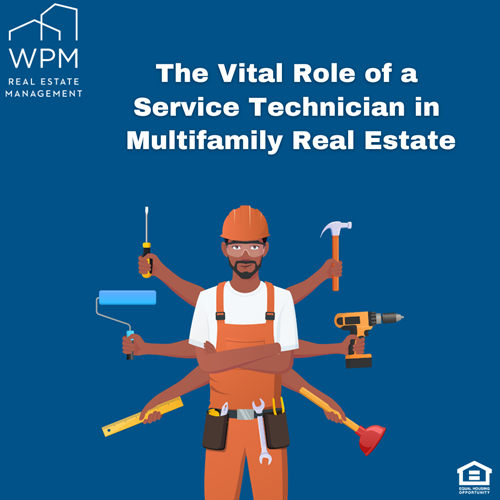
The Vital Role of a Service Technician in Multifamily Real Estate-image

In the multifamily real estate industry, service technicians play a critical role in ensuring that apartment communities run smoothly and efficiently. Often described as the "jack of all trades," this is an understatement. These professionals need a diverse skill set that includes basic knowledge of electricity, plumbing, and HVAC systems. Their ability to tackle a wide range of maintenance issues makes them indispensable to property management teams.   In addition to routine maintenance issues, service technicians also handle preventive tasks, like changing HVAC filters, clearing dryer vents, and cleaning gutters. Their work helps avoid the need for costly repairs and replacements. Service technicians and the entire service team also play an important role in resident satisfaction, which affects the community’s overall success. Satisfied residents stay longer, reducing turnover and marketing expenses for the property.   Daily Responsibilities Service technicians are responsible for a myriad of maintenance tasks within an apartment community. Their day typically starts with a list of work orders assigned by the service manager, who is also a working manager tackling their own set of work orders. These tasks can include:   - Fixing defective outlets, switches, light fixtures, and faucets - Diagnosing and repairing stove and other appliance issues - Replacing fixtures and appliances - Unclogging drains in tubs, sinks, and toilets - Repairing cabinetry and replacing sinks - Caulking and tile replacement in bathrooms and kitchens   No two days are alike for a service technician. One day might be spent entirely on plumbing issues, while the next could be dedicated to HVAC repairs. The workload can vary significantly, with some tasks taking just an hour and others, like major HVAC repairs, potentially consuming an entire day. This variety requires technicians to be flexible and quick to adapt to changing priorities.   In addition to routine maintenance, service technicians are also on call for emergencies. Depending on the size of the property, they might be on an emergency call rotation, ensuring that urgent issues are addressed promptly. This on-call duty requires technicians to be adaptable and ready to handle any situation that arises, often making them the first point of contact for residents facing maintenance problems. Service technicians are often offered reduced rental rates to live at the property or another nearby property in the company’s managed portfolio to help ensure faster response times to emergencies.   Training and Skill Development Training is also a key component of a service technician's day. WPM has developed a robust approach to maintenance and service training, helping technicians strengthen their skills and experience. In-field training allows new technicians to learn on the job from more experienced professionals, and regular training sessions help all team members stay updated on the latest maintenance techniques and safety protocols. Through this continual learning environment, service technicians gain the skills, experience, and confidence to handle a wide range of service and maintenance issues. Additionally, our 12-month Service Mentoring And Response Training (SMART) program is designed to give rising team members the skills to successfully move into leadership positions within the organization.   Career Growth Opportunities Entry-level technicians should have a basic understanding of electricity, plumbing, and appliance repair. Over time, they can expect to gain advanced skills through on-the-job training and additional courses. The role also requires strong people skills, as technicians often interact with residents, addressing their concerns and ensuring their satisfaction.   For those interested in expanding their skill set and advancing their career, there are multiple opportunities for growth. Technicians can advance to assistant service manager and service manager positions at a single property and eventually to a senior area service manager role, overseeing maintenance needs of multiple properties and managing larger teams. There is no set timeline for these promotions; progression depends on individual effort and acquired skill sets.   ---------------- “Being a Service Technician opened my mind to new perspectives and fueled my desire to help others. Each day brings new learning opportunities, and I am grateful for the chance to share my knowledge while continually expanding it.” – Frank Rocco, Service Manager, WPM Real Estate Management (promoted from Service Technician) ----------------   Preparing for the Role For those interested in becoming a service technician, technical schools offer valuable training in essential skills like electricity, plumbing, and HVAC systems. For those who cannot afford formal education, starting as a site technician at a property provides a pathway to gain experience and learn about working in property management service. Some companies, like WPM, also offer in-house training and mentorship programs, allowing new hires to develop their skills and advance their careers.   Final Thoughts The role of a service technician in multifamily real estate is both challenging and rewarding. It requires a versatile skill set, adaptability, and a willingness to continuously learn and improve. For those who enjoy a dynamic work environment and the satisfaction of solving problems, this career offers numerous opportunities for growth and development.   Interested in a career in multifamily property management service? Visit https://www.wpmllc.com/careers   to explore the opportunities at WPM Real Estate Management and join our team of quality service professionals.   

Read more
Why CAI Credentials Matter in Community Management-image

When it comes to managing your community, not all management firms are created equal. Plenty can handle the basics—but real value comes from education, experience, and a commitment to professional standards. That’s where CAI credentials make a real difference. At WPM Real Estate Management, our team includes professionals with respected industry designations like CMCA® (Certified Manager of Community Associations), AMS® (Association Management Specialist), and PCAM® (Professional Community Association Manager)—the highest credential awarded by the Community Associations Institute (CAI). These aren’t just titles. They reflect hands-on experience, in-depth training, and a serious commitment to the work. WPM also holds the AAMC® (Accredited Association Management Company) designation—an elite distinction that means every one of our community managers is credentialed and actively pursuing continuing education. Beyond credentials, our managers are deeply engaged with CAI at both the local and national levels—speaking at conferences, leading discussions, and staying plugged into the policy changes and industry shifts that directly impact the communities we serve. So what does this mean for your board? It means you benefit from:   Efficient, well-run meetings led by professionals who understand governance and board dynamics Expert guidance from a team who understands current laws, reserve funding best practices, and governance trends A management partner who is proactive—not reactive—when it comes to changes in legislation or industry standards Is Your Community in Expert Hands?   Here’s a simple checklist you can use when evaluating your current management—or when considering a new partner:   Do their managers hold professional CAI designations like CMCA®, AMS®, or PCAM®? Is the company accredited by CAI  as an AAMC®? Are team members actively involved in CAI, either locally or nationally? Do they prioritize ongoing training and continuing education? Can they speak confidently about current legislation and evolving industry trends? Do they provide structured, professional support to your board? Are they advising your board, or just carrying out tasks? If you’re unsure, or answered “no” to any of these, it may be time to reevaluate. As communities face growing complexity around budgets, reserves, legislation, and resident expectations, you need a qualified and engaged management partner with the expertise to guide smart decisions and protect your investment. Because at the end of the day, who you trust to manage your community matters. It supports your board’s credibility and ensures your community is being managed with insight, not just oversight.

Read more