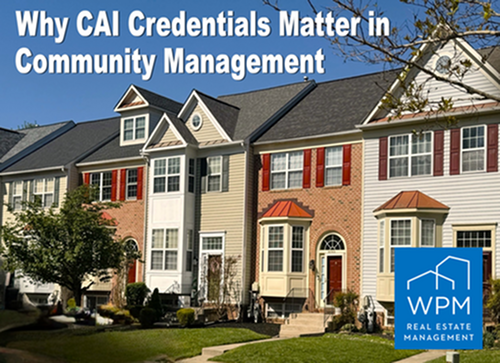
When it comes to managing your community, not all management firms are created equal. Plenty can handle the basics—but real value comes from education, experience, and a commitment to professional standards.
That’s where CAI credentials make a real difference.
At WPM Real Estate Management, our team includes professionals with respected industry designations like CMCA® (Certified Manager of Community Associations), AMS® (Association Management Specialist), and PCAM® (Professional Community Association Manager)—the highest credential awarded by the Community Associations Institute (CAI). These aren’t just titles. They reflect hands-on experience, in-depth training, and a serious commitment to the work.
WPM also holds the AAMC® (Accredited Association Management Company) designation—an elite distinction that means every one of our community managers is credentialed and actively pursuing continuing education.
Beyond credentials, our managers are deeply engaged with CAI at both the local and national levels—speaking at conferences, leading discussions, and staying plugged into the policy changes and industry shifts that directly impact the communities we serve.
So what does this mean for your board?
It means you benefit from:
Efficient, well-run meetings led by professionals who understand governance and board dynamics
Expert guidance from a team who understands current laws, reserve funding best practices, and governance trends
A management partner who is proactive—not reactive—when it comes to changes in legislation or industry standards
Is Your Community in Expert Hands?
Here’s a simple checklist you can use when evaluating your current management—or when considering a new partner:
Do their managers hold professional CAI designations like CMCA®, AMS®, or PCAM®?
Is the company accredited by CAI as an AAMC®?
Are team members actively involved in CAI, either locally or nationally?
Do they prioritize ongoing training and continuing education?
Can they speak confidently about current legislation and evolving industry trends?
Do they provide structured, professional support to your board?
Are they advising your board, or just carrying out tasks?
If you’re unsure, or answered “no” to any of these, it may be time to reevaluate.
As communities face growing complexity around budgets, reserves, legislation, and resident expectations, you need a qualified and engaged management partner with the expertise to guide smart decisions and protect your investment.
Because at the end of the day, who you trust to manage your community matters. It supports your board’s credibility and ensures your community is being managed with insight, not just oversight.
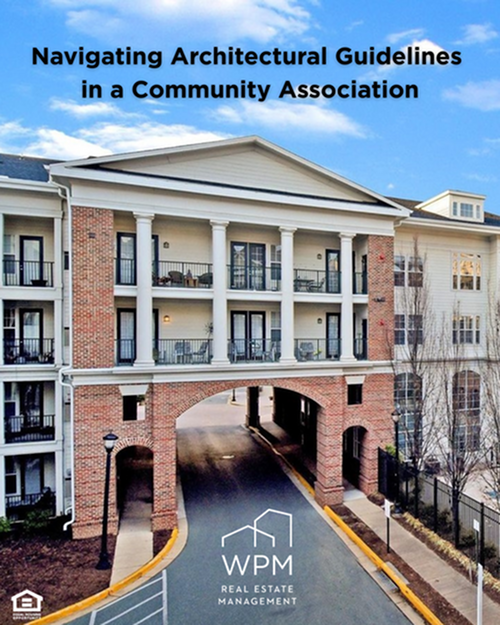
Living in a community association, such as a homeowners' association (HOA) or a condominium association, means adhering to certain architectural guidelines. These guidelines are in place to maintain the aesthetic and structural integrity of the community. While they can seem daunting, understanding and following these guidelines can help ensure compliance and harmony within the neighborhood.
Understanding Your Documents
As a homeowner, it is important to thoroughly understand your community's governing documents. These documents outline what changes require approval from the association and the process for obtaining this approval. Often, homeowners may assume that certain modifications, especially those that seem minor or are within their unit, do not require notification. However, it's crucial to verify this assumption with your association or management company before making any changes. Failing to do so can lead to costly consequences if the modifications do not comply with the guidelines and need to be undone.
The Importance of Communication
For boards and architectural committees, clear and consistent communication with homeowners is key. At least annually, the board should remind homeowners of their responsibilities and the architectural guidelines they need to follow. This can be included in a move-in letter for new residents, highlighting critical aspects of the guidelines.
Creating a separate, concise architectural guidelines document can significantly aid in this communication. Instead of homeowners having to sift through potentially hundreds of pages of legal documents, a brief synopsis outlining what modifications require approval, what is automatically approved, and any specific rules can be more user-friendly. For instance, if installing a clear glass storm door is allowed without approval, but other types require permission, this should be clearly stated in the guidelines.
Consistent Enforcement
Enforcement of these guidelines must be uniform to avoid any perception of favoritism or discrimination. The rules should be applied consistently, regardless of who is on the board or the architectural committee. This uniformity protects the board and the association from potential claims of discrimination or unfair treatment. If a homeowner installs a half screen that is against the guidelines, the board must enforce the removal of that screen, just as they would with any other homeowner, whether they are a friend or not.
Legal Considerations
Boards should be aware that homeowners can file complaints against the association if they believe the guidelines are being enforced unfairly. For instance, in some areas there are specific commissions on common ownership communities where such complaints can be filed. These commissions have the authority to reverse board decisions if they find that the guidelines were not enforced uniformly. There have also been instances where associations were sued under the Federal Human Relations Commission for discrimination.
Navigating architectural guidelines in a community association requires both homeowners and boards to understand the rules. Boards must communicate these rules clearly and enforce them consistently. Clear and concise guidelines, applied uniformly, help maintain the community’s aesthetic integrity and ensure fair treatment for all residents. This approach protects the community from legal disputes and fosters a harmonious living environment.
For multifamily real estate owners and community association boards, selecting a property management firm can be quite an undertaking. It’s a fragmented market – everything from small, owner-operator managers with one or two employees who “do it all” to huge, national and international companies that manage billions of dollars of real estate and thousands of communities. While there are pros and cons to each, one area that is often overlooked during due diligence in choosing a property manager is how a company’s size affects its maintenance operations.
Major national operators have untold lists of vendors, often vetted through a procurement process that can be bureaucratic. Depending on the location of the property or the type of service needed, vendor bids are reviewed and selected by individuals who may or may not have even stepped foot on the property. On the other end of the spectrum, small operators often lack the size to attract larger vendors or competitive pricing, opting to funnel work through a handful of smaller vendors they know, but who may or may not be best suited for the work.
Working with a regional management firm provides a sweet spot for communities who recognize the importance of maintenance operations in preserving the value of their assets and optimizing the return on their investment.
As a large, regional property management firm, WPM knows what it takes to attract and work with high quality vendors and how to maximize maintenance operations. Here are a few considerations and why size matters to your community’s maintenance operations (and bottom line!).
Vendor Selection. No one wants to find out in the middle of a project that the company doing work on your community roof wasn’t insured properly or lacked appropriate licensing. So it’s important that your property management company has a fair and rigorous process for due diligence on vendors. WPM works with a reputable, third-party provider to vet prospective vendors, determine and track insurance verifications, assess fit for multifamily and/or association communities, and evaluate performance against our standards of excellence. Not all vendors are a fit for all property types. Only after a thorough review are vendors approved to be a preferred partner for one of our divisions and eligible to bid on projects for the communities we manage.
Buying Power. Having a portfolio that represents a sizeable potential market to vendors provides a management company with access to a larger pool of high-quality vendors. This helps secure more competitive, bulk, and volume-based pricing. WPM’s size creates a spend that is large enough that vendors are willing to create discount pricing for things like flooring, cabinetry, fixtures, HVAC equipment and supplies, roofing, paint, landscaping materials, and so much more, because they know that over the course of the year we will purchase a significant volume across our communities. This means we’re not purchasing at retail rates, but rather securing lower commercial or hybrid rates, locking into a discounted rate for purchases made throughout the year. In the end, these savings benefit our clients, both financially and operationally, eliminating the need to inventory or store items in order to receive lower pricing.
Quality & Relationships. Size also affects the depth of relationships a company can have with its vendors. Does the company have a direct line to the vendor contact to resolve issues? While competitive pricing is important, having strong relationships with vendors who have mutual respect for quality work and a shared commitment to doing what’s right when things go sideways (which, unfortunately, they can sometimes do) can mean the difference between successful projects and costly re-work and blame games. WPM has spent decades building trusted relationships with preferred partners throughout the Mid-Atlantic region – from setting clear expectations for quality and service to ensuring fair pricing, accountability, and quick resolution to any issues. We have a shared goal to deliver exceptional value to the clients we serve.
Staff & Contractor Management. How a property management company uses its team can provide insight into how well they optimize your maintenance budget. Do they try to keep everything in house, deferring maintenance projects they can’t get to? Or do they leverage outside contractors for time-consuming and specialty-skilled work? Bringing in a contractor to make sure work gets done properly can minimize the impact of delays and deferred maintenance. WPM’s team takes pride in carefully evaluating the work to be done and identifying the most cost-efficient and productive way to deliver quality results. In the end, this ensures the highest level of service for our clients.
Knowing how size can affect the way maintenance is handled for your property or community can be beneficial in selecting a property manager. What may appear relatively mundane or unimportant can actually have greater implications over time for the value of your property. In the end, size does matter. Take the time to really explore this aspect to ensure you have the right-sized management company to manage your community.
For 13 consecutive years, WPM Real Estate Management has been recognized as a Top Workplace in Maryland. But what does that truly mean? This distinction isn’t simply an accolade handed out by The Baltimore Sun based on arbitrary criteria. Rather, it is a recognition that comes directly from our Associates—those who experience and shape our workplace culture every day.
Each year, WPM participates in an independent, third-party survey that evaluates key drivers of employee engagement, including professional development opportunities, compensation and benefits, flexibility, inclusion, leadership, and alignment with company values. It’s our Associates’ candid feedback that determines this award, making it a particularly meaningful honor. To be recognized year after year speaks volumes about the culture we’ve built, the work environment we continue to foster, and the investments we make in our people.
A Culture That Sets Us Apart
Why do people choose to work at WPM? While competitive compensation and benefits certainly play a role, the overwhelming answer is culture . At WPM, Associates aren’t just employees—they are valued members of a team where their voices matter. The company actively seeks feedback and, most importantly, acts on it. Leadership listens, makes improvements, and continually strives to create an environment where Associates feel heard and empowered.
One of the key differentiators at WPM is our focus on “ownership thinking.” Associates at all levels are encouraged to take initiative, make decisions, and contribute to the company’s success. When people feel invested in their work, they bring their best, helping the company perform at its highest level.
“I love that everyone is a team player and willing to help no matter the issue or department” – WPM Associate Survey Comment
Investing in Our People
At WPM, we believe in the power of continuous learning and professional development. We provide Associates with access to internal training programs, external industry certifications, and tuition reimbursement for industry-related education. This commitment to education ensures that our team members have the resources and opportunities they need to advance their careers and expand their skill sets.
For those seeking career growth, WPM does more than encourage it—we actively invest in it. By providing the tools, guidance, and support needed to develop professionally, we empower our Associates to take charge of their careers and shape their own paths within the company.
“WPM ensures you have the tools you need to be successful. I love the opportunities to learn and grow.” – WPM Associate Survey Comment
What It Means for Our Clients
Our legacy as a Top Workplace extends far beyond our internal culture—it has a direct impact on the service we provide. In an industry where attracting and retaining top talent can be a challenge, WPM stands out as a place where people want to build their careers. When employees feel valued and supported, they bring that same level of responsibility to their work, creating a more engaged and dedicated team.
For our clients, this means consistency, expertise, and a level of service that comes from experience and stability. This leads to stronger relationships, deeper knowledge of the communities we manage, and a team that takes genuine pride in delivering results. A great workplace fosters a great team—and that translates into better outcomes for homeowners, residents, and clients alike.
“The entire company operates as a team and supports each other. You feel valued as an employee and acknowledged for the efforts you put into the day to day.” – WPM Associate Survey Comment
A Recognition That Reflects Our Values
Being named a Top Workplace year after year is more than just an award—it’s a testament to the dedication of our Associates and the culture we’ve built together. It speaks to our commitment to fostering an environment where people feel they have the support, resources, and opportunities to grow both personally and professionally.
This recognition isn’t just about the past; it’s about the future we continue to shape. We remain focused on what matters most: investing in our people, delivering exceptional service, and creating meaningful impact for communities throughout the Mid-Atlantic region.
Are You Protected? Understanding Critical Elements of HOA and Condo Insurance
Navigating the complexities of insurance coverage for homeowner associations (HOAs) and condominium associations can be daunting. Both the association and individual homeowners need to ensure they are adequately protected. This requires a clear understanding of various insurance policies, regular annual reviews, and informed decision-making. Here's a quick guide to help you understand the essentials of HOA and condominium insurance.
Annual Review of Condominium Insurance Policies
It’s important for community associations to mitigate risk by reviewing their insurance policies annually. Doing so ensures that they maintain adequate coverage and stay updated on any changes or new requirements. Associations are responsible for restoring property to their original builder-grade condition after a disaster, regardless of the cause. Homeowners, in turn, are responsible for the association's deductible, which could be a sizable number. On top of that, without the right coverage, homeowners may find themselves responsible for additional, unanticipated costs. Regular policy reviews help avoid surprises and ensure that all parties are clear on their responsibilities.
Essential Types of Association Insurance
Property Insurance: Property insurance is issued to protect physical assets from damage caused by risks such as fire, flooding, weather and theft. However, without a clear understanding of what’s covered, associations and homeowners run the risk of leaving themselves holding the bag for additional costs associated with restoration, replacement and temporary relocation.
Directors and Officers (D&O) Insurance: Most boards have D&O insurance that protects elected board members in the event they are sued for wrongful acts in managing the association. But what about non-elected board members, committee members, and management companies? Does it provide protection for non-monetary suits, which involve legal actions where the plaintiff seeks a decision or reversal rather than financial compensation? It's important to verify what your policy coverage includes.
Workers' Compensation Insurance : Even if the association has no employees, a blanket workers' comp policy is essential to cover volunteers working on behalf of the community association. For instance, if a volunteer is injured while helping with a community cleanup, the association might be liable for damages if they don’t have the right policy.
Fidelity Bonds and Riders : Standard fidelity bonds protect against theft by those within the association, but may not cover more sophisticated frauds like check alteration. Associations need to discuss these risks with their insurance agents and ensure their policies provide adequate protection. For example, an altered check can result in significant financial loss if not covered by an appropriate rider.
Homeowners’ Insurance and Responsibilities
Homeowners need to be fully aware of their insurance responsibilities. This is determined by the type of community you live in. As such, it's vital to understand that the type of association—condominium or HOA—is determined by the legal description in the documents created by the developer, not by the physical appearance of the property. This distinction affects insurance needs and responsibilities.
Living in a Condominium Community
In a condominium, the association is responsible for the exterior and common areas, while homeowners cover the interior and personal property. For example, if a pipe serving only your unit breaks, you are responsible for repairs, even if the pipe is hidden within walls or floors. Having an HO6 policy is essential for condominium owners to cover personal property and additional living expenses in case of a disaster.
Living in an HOA Community
In an HOA, homeowners are typically responsible for the entire structure and their property. If a common area tree falls on your house, you're responsible for the damage, even if the tree that fell was on association property. Policies that provide broader coverage, including the structure of the home and personal property, are either an HO1 or HO3 policy. Homeowners should speak to their agent to assess their needs and ensure proper coverage.
Regardless of the type of community, homeowners should fully understand what their policy covers, ensuring it includes relocation expenses should they need to vacate their home due to a disaster. Many homeowners mistakenly believe the association will cover these costs, but this is typically not the case.
Final Takeaways
It is crucial for boards and homeowners to meet regularly with their insurance agent to review and update policies. This ensures you have the proper coverage and are aware of any changes in regulations or risks.
For board members, understanding the full scope of your insurance and ensuring uniform enforcement of rules can protect against legal disputes and claims of discrimination. Homeowners should clearly understand their association type and the specific insurance policies required. Having the right coverage can save you from unexpected and significant financial burdens.
Whether you're a board member or a homeowner, staying informed and proactive about insurance is essential for protecting your investments and maintaining a healthy community.
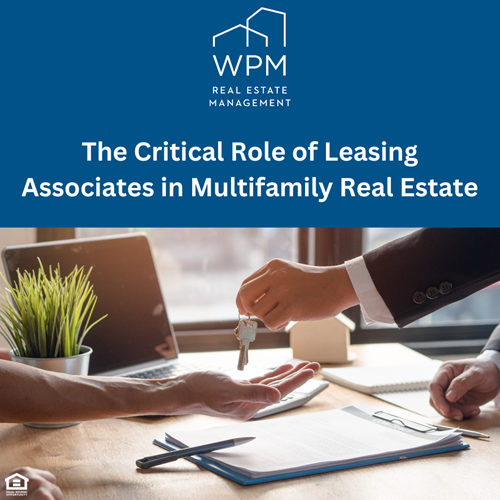
The multifamily real estate industry is a vast and dynamic field, and one of the critical roles within it is the Leasing Associate. Often referred to as a Leasing Specialist or Leasing Agent, these professionals are at the heart of property operations, acting as the frontline sales team that directly engages with potential residents. But what exactly does this role entail, and how can it be a steppingstone to a successful career in real estate?
The Role of a Leasing Associate
Leasing Associates are the lifeblood of a multifamily property’s leasing efforts. Their primary responsibility is to nurture prospective resident inquiries, tour potential residents, showcase the property, and ultimately, sell the community to prospective tenants. In addition, Leasing Specialists are usually involved with the lease signing process as well as the move-in process. In many ways, they are the "face" of the property, the first point of contact for anyone interested in leasing a unit and tend to be the person that residents are most likely to communicate with throughout their residency
This role requires a unique blend of skills, with an emphasis on sales and customer service. A Leasing Associate must not only be personable and approachable but also have the sales expertise to showcase how their apartment community stands out from the competition. They need to understand what prospective residents are looking for and demonstrate how the property meets those needs.
Local Marketing: Beyond the Leasing Office
While Leasing Associates spend much of their time in the leasing office, their responsibilities extend beyond the property’s walls. Leasing Specialists must develop expertise in the local market surrounding their apartment community, with a strong focus on understanding competitor properties. This includes researching competitors, both online and in person, to gain a clear understanding of how their community compares. Armed with this knowledge, Leasing Specialists can more effectively highlight the specific benefits of their apartment community to prospective residents.
Additionally, Leasing Specialists need to be familiar with the schools, higher education institutions, retail shopping, large employers, and small businesses located in the area surrounding their apartment community. Local marketing efforts are a significant aspect of the job, and Leasing Associates often participate in outreach activities to generate interest in the property. This could include attending housing fairs, promoting the property to local businesses, and even establishing partnerships with employers in the area to offer special deals to employees. These local marketing efforts complement larger-scale corporate marketing strategies and are essential for creating a personal touch that attracts prospective residents to specific properties.
Essential Skills and Qualifications
To succeed in this role, Leasing Associates need a blend of soft and technical skills. People skills are paramount, as the job revolves around interacting with prospects and residents. Sales ability is equally critical, as Leasing Associates must be persuasive and able to overcome objections. Customer service experience is a valuable asset as it equips Leasing Associates with the skills to handle diverse customer interactions.
Leasing Associates must also maintain a professional appearance and demeanor, as they represent the property. Strong communication skills, both written and verbal, are necessary to engage with residents and prospects effectively. Additionally, familiarity with property management software and proficiency with computers are essential for handling applications, tracking leads, and preparing reports.
The Path to Growth
While the Leasing Associate role is often seen as an entry-level position, it offers substantial growth opportunities within the multifamily real estate industry. Leasing Associates can advance to roles such as Leasing Manager, overseeing the leasing team at a larger property, or Assistant Property Manager, where they handle more operational responsibilities.
Leasing experience is invaluable for those looking to move into a Property Manager role, as it provides a deep understanding of resident interactions and day-to-day property operations. Property Managers oversee the entire property’s operations, including leasing, maintenance, and financial performance. While moving into property management may require a shift from the sales-focused nature of leasing, the skills developed as a Leasing Associate are foundational for a successful career in multifamily real estate management.
It’s not uncommon for some individuals to remain in the leasing field, finding satisfaction and success as long-term Leasing Managers. In larger properties, Leasing Managers play a critical role in driving leasing performance and resident satisfaction, often enjoying a rewarding compensation structure that includes commissions and bonuses.
Preparing for the Role of Leasing Associate
For those interested in a position as Leasing Associate, there are several ways to prepare for the role. Many candidates come from retail sales or customer service backgrounds, where they’ve developed the interpersonal and problem-solving skills needed for success in leasing. More colleges are now offering courses and even degrees in property management, providing a formal education path for those interested in real estate careers.
Training programs, such as those offered by the National Apartment Association, Institute of Real Estate Management, Maryland Multifamily Housing Association, and other industry organizations, can also be an excellent way to gain the necessary skills and find entry-level opportunities. These programs often provide participants with knowledge of leasing fundamentals, fair housing laws, and marketing strategies.
Is Leasing Right for You?
For individuals with strong sales skills, a passion for real estate, and a desire to work in a fast-paced, people-focused environment, becoming a Leasing Associate can be a fulfilling and rewarding career choice. Whether it’s an initial step to a higher-level property management role or a long-term position in the leasing field, this role provides valuable experience and exposure to the multifamily real estate industry.
With opportunities for career growth, competitive compensation structures, and the chance to make a tangible impact on a property’s success, the Leasing Associate role is an excellent entry point for anyone looking to build a career in real estate.