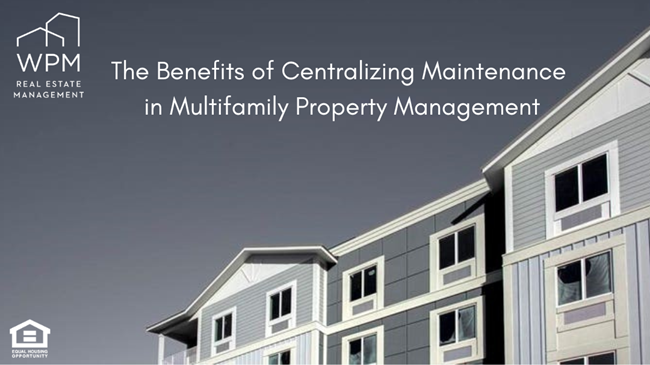
To centralize or not to centralize? That is a question many multifamily property management firms have been exploring, especially post-pandemic.
Centralization of property management maintenance can be an effective way to streamline operations and service multiple properties with a single team. However, it can also create challenges when issues arise and there isn’t an onsite maintenance person at the ready. Understanding the maintenance needs of the individual properties under management and the individual skill sets needed to support those properties is essential in designing a solution that serves both residents and owners alike.
Here are a few key areas where centralization provides benefits:
Workforce Skill Sets
As staffing shortages of skilled workers increase, individual properties may be challenged to retain skilled maintenance technicians. Centralizing the maintenance function creates the ability to pool resources and service properties with a higher skilled workforce than what an individual property may be able to support on its own. It also allows for building a team of individuals with diverse and critical skillsets, reducing burnout by not overloading one or two onsite individuals, and creating opportunities for staff to strengthen and grow their skills, in turn retaining quality people who take pride in their work.
In the short term, moving to a centralized approach may increase a property’s costs initially. However, in the long run, this model ensures decisions are made with both institutional knowledge and senior-level experience and that appropriate skillsets are being matched to each job, ultimately saving money for the property and the owner, while delivering the best service to residents.
Operational Efficiency
When done correctly, centralized maintenance can be extremely efficient and effective. Rather than addressing work orders as they come in each day, centralization allows maintenance teams to address routine maintenance on designated days, while being available at any time to respond to emergency issues that may arise. It also helps to navigate staffing shortages and better manage the need for contractors. For onsite managers and residents, centralized maintenance reduces the unknowns, helping them know when they may need to kennel pets, make arrangements for children, or even take off work, if needed.
Resident Satisfaction
For many residents, one of the benefits of living in an apartment community is not having to worry about maintenance. So when an issue arises or preventive maintenance is needed, it can mean a disruption. Centralizing maintenance operations can help reduce the disruption for residents, by helping them plan and prepare for services on designated routine maintenance days. It also ensures the right person is dispatched for the job, so issues can be resolved promptly with fewer disruptions. A centralized team also helps streamline coordination, improve communication, and quickly identify trends or common issues across properties. This allows for proactive maintenance measures and targeted solutions to reduce the likelihood of recurring problems. All of this supports a consistent and high level of service quality that enhances resident satisfaction.
There are merits to centralizing maintenance operations. However, in the final analysis, a hybrid model may make the most sense – with fewer permanent onsite maintenance staff supported by a centralized, higher-skilled workforce whose experience allows for greater operational efficiencies and positive resident satisfaction.
Managing the financial health of an association requires diligence, foresight, and a commitment to best practices. Whether you're a seasoned board member or newly appointed, ensuring your association's financial stability is paramount to its long-term success. Here are ten tips to guide associations in navigating their financial landscape:
Evaluate Yearly Performance. Take stock of your association's financial performance on a year-to-year basis. Are you consistently ending the fiscal year with a budget surplus or facing losses? Identifying trends can help pinpoint areas for improvement and form future budgetary decisions.
Prioritize Expense Management . Community association budgets are primarily expense-driven. When crafting budgets, focus on scrutinizing expenses first. While it may be tempting to avoid increasing assessments, neglecting to adjust for inflation or rising costs can lead to financial strain in the long run.
Avoid Unrealistic Budgeting . Beware of passing unrealistic budgets that fail to accurately reflect the association's actual expenditures. Cutting essential services or amenities to artificially lower assessments can compromise the community's well-being and lead to dissatisfaction among residents.
Implement Incremental Assessment Increases. Embrace best practices by incrementally increasing assessments by 2-3% annually. This proactive approach ensures that your association stays ahead of inflation and maintains sufficient revenue to meet its financial obligations.
Fund Reserves Adequately. Prioritize funding reserves in accordance with state laws and reserve study recommendations. Adequate reserves are essential for addressing deferred maintenance, unforeseen repairs, and capital improvements without resorting to special assessments or loans.
Be Cautious About Deferring Maintenance . Budgets and reserves should be structured to cover routine upkeep as well as long-term capital projects. Are you deferring regular maintenance due to lack of funds? This not only may be a sign of poor financial health for an Association, it can also lead to more significant issues and increased costs down the line.
Review Monthly Financials . Actively engage with your association's financial statements on a monthly basis. Don't hesitate to ask questions and seek clarification from your management company or financial professionals. Regular monitoring can help identify potential issues early on and allow for timely adjustments.
Maintain Adequate Cash Reserves . Aim to maintain a minimum of two months' worth of assessments in your association's bank account at the end of each month ( after paying that month’s expenses). Building up cash reserves provides a financial buffer against unexpected expenses, delinquencies, or revenue shortfalls.
Monitor Equity and Retained Earnings. Keep a close eye on your association's equity, or retained earnings, and aim for a balance equivalent to 10-20% of your annual assessments. Healthy equity levels indicate financial stability and provide reassurance to stakeholders.
Seek Professional Guidance When Needed. When in doubt, seek out assistance from your community manager or other financial experts specializing in community associations. Their insights and guidance can be valuable in understanding your association’s financial position and helping navigate complex financial matters.
Ultimately, prioritizing the financial health of your association is crucial for its sustainability and long-term viability. By following these tips and maintaining focus on financial management, associations can thrive and fulfill their mission of serving their communities effectively.
Balancing occupancy rates with long-term profitability is one of the keys to effective leasing strategies in the multifamily industry. It is important to understand both the owner’s goals for the property and the shifting dynamics of the market when considering changes to rental rates, application approvals, and delinquency management.
In turbulent times – whether that’s an economic downturn, changes to the market’s population, or a global pandemic – it can be tempting to make changes for short term gains without recognizing the potential long-term implications. Here are five key guidelines WPM property managers suggest for managing changing markets and ensuring effective and sustainable leasing practices.
Establish and maintain standards for application approvals . One of the ways that WPM creates value for our clients is by maintaining the highest standards of excellence. This includes the standards set for application approvals, including things like thresholds set for credit scores and verifying rental histories of prospective residents. While in the short run holding on to these during tough times may affect occupancy rates, over the long-term doing so ensures consistency in the quality of the property’s residents and the best results for owners.
Remain objective with data-driven practices. Everyone has a story. And while it is important to presume good intent and to empathize with an individual’s situation, property managers must remain objective and unbiased. Using data to inform decision-making and not manipulating processes is critical. This is part of our commitment to transparency about our leasing practices and to maintaining fair housing and equal opportunity standards.
Focus on the human experience. At its core, property management is fundamentally about serving people, with the aim of creating great places to live. This means understanding the aspirations and constraints of potential residents and extending empathy to those who may not meet application criteria. By fostering a people-centric approach with each prospective resident, managers cultivate goodwill and strengthen relationships and connections within the broader community.
Work to proactively mitigate risks. Part of the role of a property manager is to be forward-thinking about changes that may occur. In addition to carefully managing delinquencies, it’s important to connect and understand residents and their plans. Preparing for potential issues that might create a negative situation for both the property and the resident allows for early intervention and support.
Think creatively to solve problems. This works hand-in-hand with proactively mitigating risks. When vacancy rates are low it can be easy to pull back on some of the traditional practices for driving new resident applications. Proactively seeking out unconventional outreach opportunities, building a waiting list and remaining engaged with those prospective residents, as well as knowing resources in the community to help residents are just a few ways to creatively address leasing challenges.
In summary, navigating the complex terrain of apartment leasing demands a strategic blend of short-term pragmatism and long-term vision. By adhering to the principles of maintaining high standards, embracing data-driven decision-making, prioritizing empathy and understanding, proactively mitigating risks, and fostering creativity in problem-solving, property managers can effectively steer through market fluctuations while cultivating resilient and thriving communities. By staying true to these guiding principles, property managers can ensure not only sustained profitability but also environments where residents feel valued, supported, and at home.
The Power of Community Partnerships: A Q&A with Franklyn Baker, President & CEO of United Way of Central Maryland
Community partnerships have been a longstanding part of WPM’s commitment to giving back. The upending nature of the pandemic is creating greater need for many families and communities. We recently spoke with Franklyn Baker, President & CEO of United Way of Central Maryland (UWCM), about how organizations are responding and his perspective on the future.
WPM : How would you describe the mission of United Way of Central Maryland and the organization’s focus before COVID-19?
Baker : The mission of United Way is to improve lives. We do that in two ways – by empowering leaders and by mobilizing individuals to have a powerful impact in our communities. When I say “leaders,” I’m not simply talking about those in government or in the board room; I’m talking about individuals at any level who are stepping up as advocates, whether in an organization or as a community member. UWCM has always been about providing help whenever and wherever it is needed. Our vision is happy, thriving communities where all people live their best lives – on their own terms.
WPM: How has COVID-19 changed things for UWCM and your work with families and communities?
Baker: Like many other organizations, we have really been forced to reimagine how we work, from service delivery, to grantmaking with nonprofits, to how we collaborate and partner with donors, to how we engage and connect with our affinity groups such as Leaders United, Women United, Tocqueville Society and Emerging Leaders United. We’ve had to be creative to maintain social distancing, while still providing vital services to those in need. Things like contactless food delivery or shifting to phone and video meetings for our case workers helping families.
Our 211 Helpline is one of the greatest resources for those in our community. The helpline averages 300 to 400 calls daily. But since the pandemic, we’ve seen that number increase five-fold with one day logging over 2,000 calls!
We quickly pivoted and were able to mobilize, set up the technology, and train more than 85 volunteers to effectively manage the increased demand for 211. That’s where our foothold in the region and our commitment to being at the intersection of “what’s needed” and “what we do best” allows us to be flexible to adapt and address evolving needs in the community.
WPM: From your vantage point, what are the greatest needs you’re seeing in the community?
Baker: The greatest needs we’ve seen since the pandemic started are food assistance, nonprofit infrastructure, digital equity for students, mental health and employment assistance.
We have a three-phased approach: Respond, Recover and Rebuild. Although the needs in the community may overlap phases, this approach ensures we mobilize quickly to address immediate challenges, while remaining focused on the need for long-term stability and prosperity in our communities.
Food assistance is a huge need and will continue to be as we move through the Recover and Rebuild phases. Our immediate response was a collaborative effort, quickly granting funding directly to over 10 nonprofits in the food pantry space to ensure they were able to continue their operations to distribute food to those in need. Without this funding they might have had to shut down, leaving many without access to food. As we help people to Recover, many difficulties related to job loss, housing needs or instability, stress of financial burdens, and more will continue to affect individuals in our communities. With the new school year, digital equity remains an issue. UWCM is supporting what schools are doing to help make devices and internet connectivity more widely available. We’ve also set up a separate fund in 211 to assist community members with mental health, not only connecting individuals to resources, but also providing financial assistance for mental health services, when appropriate.
WPM: What resources are available to communities and residents affected by the pandemic?
Baker: The impact has been ubiquitous, affecting workers at multiple levels across many industries – from restaurants, hospitality and entertainment to healthcare, education, transportation, and nonprofits. It’s important for members of our community to understand that the 211 Maryland Helpline is for anyone facing challenges during this time. There are more than 6,500 health and human services resources available to those who call, chat or text into our helpline. It’s open 24/7 and offers confidential support in 150 languages. Several of the information and referral specialists are Master’s-prepared, and all are highly skilled and passionate about helping those who are struggling or in need of support.
For help, dial 2-1-1 by phone, go to www.211md.org for email or chat, or text your zip code to 898-211.
WPM: How do you see COVID-19 changing things for multifamily real estate, commercial real estate, and those organizations who provide services to individuals living and working in these types of properties?
Baker: Housing is a big issue that will continue to grow. Not only has the pandemic had an effect on residents struggling to meet their financial obligations, but also on multifamily housing landlords. Both will require support to successfully navigate the challenging environment. Many landlords, residential and commercial, want to do the right thing, but most can’t float three, six, or nine months of rent. We want to be part of the solution involving creation of credits or incentives for landlords while dealing with the eviction and debt collection moratoria.
UWCM has long-standing partnerships with the Maryland Multi-Housing Association (MMHA) and landlords. We help connect residents to financial counselors. We have launched a rent forgiveness program where tenant, landlord and UWCM share the burden of past due rents to avoid the eviction of the tenant. And we’ve also formed a fund to help with rental payments through 211.
WPM: What positive changes do you anticipate coming out of the pandemic?
Baker: The pandemic has created incredible need. And throughout this crisis, we’ve seen many people and organizations step up to help – whether that’s financially, through volunteering, or through advocacy. My hope is that these individuals and organizations will continue to do so, post-pandemic.
I think, too, the collaborations between organizations during this difficult time has strengthened the learning within our community. The information we’ve gleaned from one another and the knowledge sharing has been invaluable. We’ve seen how powerful community partnerships can be. I hope that coming out of the pandemic, we’re able to grow these collaborative efforts for systemic investments that go beyond the coronavirus, leveraging what we can accomplish together.
WPM: How can individuals and organizations get involved or help during this time?
Baker: There are multiple ways to help through UWCM – whether that’s donations of dollars, volunteering or participating in advocacy efforts. Our website connects individuals to resources and opportunities. Simply visit www.uwcm.org and select “Need Help?” or “Want to Help?” Whether you need help or are in a position to provide help, you are part of our community. Together, we will get through this.
Resident referrals are extremely important to an apartment community. We caught up with Brent Gratton to learn why they are important and what property managers can do to encourage residents to refer their friends, co-workers and relatives to live at their apartment community.
WPM: Why are resident referrals important to WPM's business?
Gratton: When reviewing the advertising sources that bring in the most leases for our apartment communities, ‘ Resident Referral’ has consistently been the second highest lease-producing source over the past seven years. This statistic is important for a number of reasons. First, it’s a very inexpensive way of advertising, which means it boosts profitability as well as productivity. Next, it lets us know that we’re managing our properties well. If people are pleased with our services, they are more likely to recommend us to others. This also sends a positive message to our clients, investors and potential business partners: when they see that we have high referral rates, they know that people are pleased with our management.
WPM: What are some practical ways that property managers can encourage residents to refer their apartment community to their friends, co-workers, relatives, etc.?
Gratton: The best way to ask residents to refer us to others is to, well, ask them! In every email, flyer, and all resident-facing communications, property managers should always include a reminder to residents to refer their WPM apartment community to others. Managers should also keep this in mind during interactions with residents; if a resident is pleased with their apartment home and WPM’s management, follow up and ask if they will refer us to others who may be in the market for an apartment home.
Finally, resident events are a great opportunity for properties to encourage resident referrals. Managers can ask existing residents to invite their friends, co-workers, relatives, etc. These guests can take a tour of the property and see the sense of community that we create which will hopefully make them want to make a WPM-managed community their next home.
WPM: What are some helpful tips that property managers can use to improve residents' experience and overall satisfaction at their properties?
Gratton: In addition to the world-class service that WPM Associates provide to our residents, one of the most important ways to ensure that residents’ experiences remain positive is to ensure that there is a direct and open line of communication between property managers and residents. In today’s world, it is extremely important to provide multiple ways that residents can easily interact with the office. In addition to standard lines of communication such as email, text, online chat, and phone, we also offer an app that allows residents to submit work orders, pay rent, contact the manager and more. Streamlining the communication process allows residents to easily communicate any questions or issues they may have and it allows us as property managers to respond quickly and efficiently which contributes to our track record of satisfied residents.
Another way to ensure that residents are satisfied is to ask them. We regularly ask for feedback about residents’ experiences. If there is an issue, we then have the opportunity to address it. If a resident provides positive feedback, we encourage them to post it online, as 8 out of 10 prospective residents use online reviews when determining where they want to live.
Further, WPM works hard to foster a sense of community at its properties through social media and resident events. This also has a direct effect on a resident’s satisfaction: if they feel a sense of belonging, they are far less likely to seek a new home.
Brent Gratton is WPM’s Director of Multimedia Marketing and Communications, overseeing the organization’s marketing and communications initiatives. Brent is active with the Institute of Real Estate Management (IREM), the Maryland Multi-Housing Association (MMHA), and Toastmasters International. He is continuing his education with IREM and is currently a Certified Property Manager (CPM) candidate. Brent was honored with WPM Real Estate Management's Outstanding Achievement Award in 2014 and again in 2016.
WPM recently interviewed Shari Solomon, Esq., president and founder of CleanHealth Environmental, LLC. Ms. Solomon shared her expertise with WPM about how workplaces and residences can mitigate the risk of exposure to COVID-19 for their residents and tenants.
WPM: What can you tell us about the importance of industrial hygiene generally, before COVID-19?
Solomon: As an environmental consultant who specializes in industrial hygiene, I focus on occupational exposures to health hazards which pertain to safety concerns in working environments. For example, my colleagues and I may assess indoor air quality exposures, administer OSHA trainings, and/or provide infection prevention support to the healthcare field.
My area of expertise is infection prevention. When I first started working as an industrial hygienist for the healthcare industry nearly 15 years ago, the primary focus was on the level of radiation that technicians might be exposed to, or the chemical hazards that pathologists may come into contact with during medical processes, for example.
There is now a recognition of the safety hazards that may arise for environmental service technicians (the terminology we use for the housekeeping staff) in the healthcare field. For example, the average environmental services technician comes into contact with harsh disinfectants on a daily basis. We therefore assess procedures that help lessen their exposure. More recently, we have become more focused on biological sources of exposures, which is where our expertise can really help reduce the spread of the COVID-19.
WPM: How has COVID-19 changed things for multifamily real estate, commercial real estate, and those organizations who provide services to individuals living and working in these types of properties?
Solomon: COVID-19 has significantly affected many areas of our lives, which naturally will impact the “new normal” for where we live and work.
For commercial real estate, the stay-in-place mandates coupled with the public’s natural reluctance to venture out means commerce has been curtailed. As a result, one of the biggest things that commercial property managers can do to encourage re-occupancy is to create and communicate a re-occupancy program.
We can substantially mitigate the risk of infection by minimizing the opportunity for transfer. To do this, property managers should:
Develop a policy that stipulates CDC guidelines, such as maintaining social distancing, wearing a mask, etc.
Communicate the policy with occupants and tenants
Continue to provide periodic validation that the policy is being followed and enforced.
For multifamily real estate, the focus is not on re-occupancy, but on maintaining occupancy. The three steps listed above will also provide reassurance to multifamily residents, encouraging them to maintain occupancy.
As for the guidelines that each policy should include (point number one, above), we recommend addressing the following:
Adhere to recent CDC guidelines: As our understanding of COVID-19 evolves, it is important to follow the latest guidelines from the CDC. Each facility should appoint at least one person to regularly review these guidelines and update the policy accordingly.
Mandate social distancing. Require that employees stand six feet apart and post signage to remind anyone who enters the building about this rule. Create visual cues to help people remember what six feet looks like. For example, one company drew circles around employees’ desks. Managers should also consider installing plexiglass or higher partitions.
Require Personal Protective Equipment (PPE): PPE such as masks should be required in any indoor environment.
Cleaning and disinfection: Create a cleaning schedule that includes frequent cleanings of the entire building, and in particular the high-traffic areas and high-touch surfaces.
Hand hygiene: Encourage frequent hand washing by posting signage throughout the building and creating more wash stations. Create signage that discourages shaking hands and touching.
Address indoor quality: Improve air quality by improving air circulation. Ensure your HVAC system is functioning well by continuing regular maintenance, which includes inspecting and changing air filters regularly. Also continue to look for ways to increase access to fresh air.
Communication: It cannot be overstated that these safety procedures need to be communicated as the norm at frequent intervals. People get comfortable and will naturally slide into less strict adherence to the policy. It is up to property leadership to continue to communicate, monitor and enforce compliance.
WPM: What do you believe are the most important challenges around “re-opening”?
Solomon: I think maintaining vigilance about the health risk COVID-19 poses will be an ongoing challenge. It could be tempting to become relaxed about communicating and enforcing a building’s policies. We must not let this happen, but continually reference CDC guidelines to be sure we are offering the best in safety and compliance to our residents and tenants.
WPM: Are there any new opportunities or positive changes you anticipate coming out of the pandemic?
Solomon: I am glad to see industries more focused on infection prevention. This could be a positive shift toward a healthier lifestyle for all of us.
I also think the new flexibility that allows us to work from home could have positive repercussions for both people’s work/life balance and productivity.
WPM: What advice would you provide to multifamily and commercial real estate owners and related service providers as they begin to re-open?
Solomon: People have a lot of anxiety right now because they feel like they have no power to fight against the spread of this virus. But I want to empower them to know that they can protect themselves if they take right measures to minimize the opportunity for transfer of infection.
For example, I had a government client who was trying to figure out how to protect their employees when 90 percent of them arrived to work via public transportation. The manager felt powerless to contain the exposure. But I advised that there are six links in the “chain of infection.” If you break any one of those links, such as washing your hands to remove the pathogen or not touching your face, you can significantly reduce your risk. Or you can take ownership of sanitizing your personal desk space and requiring social distancing when talking to colleagues. You do have the power to reduce your risk!
CleanHealth Environmental, LLC offers comprehensive training and consultation services for industrial hygiene fields and infection prevention. These services can both satisfy regulatory compliance in the field and provide valuable risk management solutions. For more information about CleanHealth visit www.cleanhealthenv.com.