Posts about Maintenance

The Goldilocks Principle: Maintenance Advantages of the Right-Sized Property Management Company-image

For multifamily real estate owners and community association boards, selecting a property management firm can be quite an undertaking. It’s a fragmented market – everything from small, owner-operator managers with one or two employees who “do it all” to huge, national and international companies that manage billions of dollars of real estate and thousands of communities.  While there are pros and cons to each, one area that is often overlooked during due diligence in choosing a property manager is how a company’s size affects its maintenance operations.   Major national operators have untold lists of vendors, often vetted through a procurement process that can be bureaucratic. Depending on the location of the property or the type of service needed, vendor bids are reviewed and selected by individuals who may or may not have even stepped foot on the property. On the other end of the spectrum, small operators often lack the size to attract larger vendors or competitive pricing, opting to funnel work through a handful of smaller vendors they know, but who may or may not be best suited for the work.   Working with a regional management firm provides a sweet spot for communities who recognize the importance of maintenance operations in preserving the value of their assets and optimizing the return on their investment.   As a large, regional property management firm, WPM knows what it takes to attract and work with high quality vendors and how to maximize maintenance operations. Here are a few considerations and why size matters to your community’s maintenance operations (and bottom line!). Vendor Selection. No one wants to find out in the middle of a project that the company doing work on your community roof wasn’t insured properly or lacked appropriate licensing. So it’s important that your property management company has a fair and rigorous process for due diligence on vendors. WPM works with a reputable, third-party provider to vet prospective vendors, determine and track insurance verifications, assess fit for multifamily and/or association communities, and evaluate performance against our standards of excellence. Not all vendors are a fit for all property types. Only after a thorough review are vendors approved to be a preferred partner for one of our divisions and eligible to bid on projects for the communities we manage. Buying Power. Having a portfolio that represents a sizeable potential market to vendors provides a management company with access to a larger pool of high-quality vendors. This helps secure more competitive, bulk, and volume-based pricing. WPM’s size creates a spend that is large enough that vendors are willing to create discount pricing for things like flooring, cabinetry, fixtures, HVAC equipment and supplies, roofing, paint, landscaping materials, and so much more, because they know that over the course of the year we will purchase a significant volume across our communities. This means we’re not purchasing at retail rates, but rather securing lower commercial or hybrid rates, locking into a discounted rate for purchases made throughout the year. In the end, these savings benefit our clients, both financially and operationally, eliminating the need to inventory or store items in order to receive lower pricing.    Quality & Relationships. Size also affects the depth of relationships a company can have with its vendors. Does the company have a direct line to the vendor contact to resolve issues? While competitive pricing is important, having strong relationships with vendors who have mutual respect for quality work and a shared commitment to doing what’s right when things go sideways (which, unfortunately, they can sometimes do) can mean the difference between successful projects and costly re-work and blame games. WPM has spent decades building trusted relationships with preferred partners throughout the Mid-Atlantic region – from setting clear expectations for quality and service to ensuring fair pricing, accountability, and quick resolution to any issues. We have a shared goal to deliver exceptional value to the clients we serve. Staff & Contractor Management. How a property management company uses its team can provide insight into how well they optimize your maintenance budget. Do they try to keep everything in house, deferring maintenance projects they can’t get to? Or do they leverage outside contractors for time-consuming and specialty-skilled work? Bringing in a contractor to make sure work gets done properly can minimize the impact of delays and deferred maintenance. WPM’s team takes pride in carefully evaluating the work to be done and identifying the most cost-efficient and productive way to deliver quality results. In the end, this ensures the highest level of service for our clients.    Knowing how size can affect the way maintenance is handled for your property or community can be beneficial in selecting a property manager. What may appear relatively mundane or unimportant can actually have greater implications over time for the value of your property. In the end, size does matter. Take the time to really explore this aspect to ensure you have the right-sized management company to manage your community.   

Read more
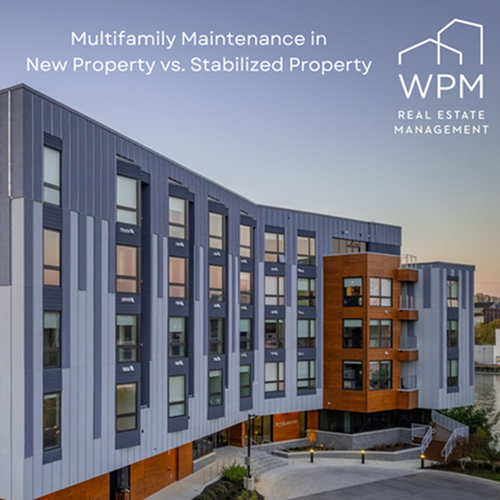
Multifamily Maintenance in New Property vs. Stabilized Property-image

  Tackling Multifamily Maintenance:  New vs. Stabilized Properties   In the dynamic world of multifamily housing, the approach to maintenance can vary significantly between new construction properties and stabilized communities. Each setting presents unique challenges and priorities that property managers and maintenance teams must address effectively. Let's dive into the distinctive aspects of maintenance in these two contexts:   New Construction Properties   Customer service takes center stage in new construction properties. A positive resident experience is paramount for garnering good reviews and ensuring successful lease-ups. Maintaining an outward facing, engaging, and helpful demeanor builds trust and fosters strong relationships with residents. From resolving issues promptly to providing a smiling face, the maintenance team plays a crucial role in creating a welcoming environment.   Managing trash is a significant operational task in new communities, especially during move-ins when boxes can overwhelm trash systems. Implementing effective box removal schedules not only eases the process for residents but also ensures proper recycling practices. Coordinating with contractors is another key aspect, involving acceptance of units, appliances, and products, as well as managing warranties during the first few years.   One area you might not think about being an issue is light bulb management! With so many bulbs going in at once it’s only natural that a certain percentage will fail early. This becomes a strategic consideration, with bulk purchases and calculations to minimize replacements. Balancing these tasks amid a flurry of activities requires meticulous planning and execution from the maintenance team.   Stabilized Properties   Stepping into a more mature, stabilized, community brings a different set of maintenance challenges. Addressing deferred maintenance issues that may have accumulated over years becomes a priority. From preventive maintenance to handling cyclical or seasonal tasks, such as aging water heaters or HVAC system issues, the focus shifts to proactive upkeep.   Trash management evolves into handling move-outs and potential evictions, requiring a different approach compared to what’s needed at newly constructed communities. However, customer service remains crucial, albeit with a more predictable set of challenges. The team's expertise in addressing aging infrastructure and systems becomes paramount, emphasizing the need for seasoned maintenance professionals.   Matching staffing to maintenance needs is vital. In a lease-up scenario, a maintenance technician doesn’t need years of experience in the industry, but they do need to be knowledgeable with a polished, customer service-oriented approach. Whereas in a stabilized community, seasoned personnel with well-rounded experience who are capable of handling complex maintenance issues are indispensable.   Ultimately, navigating multifamily maintenance involves tailoring strategies to the specific stage and condition of the property. Whether it's the dynamic environment of new construction or the ongoing upkeep of a stabilized community, effective maintenance practices ensure resident satisfaction and greater operational efficiency.

Read more
Preventative Maintenance Tips-image

Six Tips for Preventive Building Maintenance     Preventive maintenance is an essential part of property management, ensuring buildings last longer and work better, whether they are multifamily complexes or condominiums. Taking care of both the building envelope – roofs, walls, and exterior components – and proactively monitoring central systems can help extend the life of a property and avoid unexpected problems. Here are a few fundamental tips that should be part of every community’s preventive maintenance practices:   Observe Changes. Start with simple yet effective steps of paying close attention to the roofline, gutters, downspouts, and shingles. Addressing clogged gutters or misdirected downspouts can prevent water damage and ensure proper drainage away from the building.   Protect Pipes . Combat freezing temperatures by maintaining pipes and ensuring adequate heating throughout the property. Address leaks promptly to prevent water intrusion, which can lead to significant structural issues over time.   Maintain HVAC Systems. Regularly changing HVAC filters is a simple yet impactful measure to extend the system's lifespan. What’s more, it can improve energy efficiency and enhance indoor air quality.   Monitor Safety Systems. Monitor safety systems such as smoke detectors, fire pump systems, sprinklers, and door security. Proactive examination of these systems ensures that they function optimally, enhancing overall building operation and safety.   Be Proactive. Adopt a proactive rather than reactive approach to maintenance. Pay attention to minor issues and signs that may indicate potential problems. Addressing these early can prevent larger issues and costly repairs down the line.   Schedule Inspections. Implement quarterly walks coupled with safety inspections. These inspections should include filter changes, smoke alarm checks, leak assessments, and overall system evaluations. Catching issues early can prevent escalation and minimize disruptions to residents.   While it may sound simple, taking these few key steps can help identify potential problems early and limit exposure to bigger maintenance problems. Managers who proactively prioritize preventive maintenance not only help protect property values, they also create a reliable and comfortable environment for residents. 

Read more
The Benefits of Centralizing Maintenance in Multifamily Property Management-image

To centralize or not to centralize? That is a question many multifamily property management firms have been exploring, especially post-pandemic.   Centralization of property management maintenance can be an effective way to streamline operations and service multiple properties with a single team. However, it can also create challenges when issues arise and there isn’t an onsite maintenance person at the ready. Understanding the maintenance needs of the individual properties under management and the individual skill sets needed to support those properties is essential in designing a solution that serves both residents and owners alike.   Here are a few key areas where centralization provides benefits:   Workforce Skill Sets As staffing shortages of skilled workers increase, individual properties may be challenged to retain skilled maintenance technicians. Centralizing the maintenance function creates the ability to pool resources and service properties with a higher skilled workforce than what an individual property may be able to support on its own. It also allows for building a team of individuals with diverse and critical skillsets, reducing burnout by not overloading one or two onsite individuals, and creating opportunities for staff to strengthen and grow their skills, in turn retaining quality people who take pride in their work.   In the short term, moving to a centralized approach may increase a property’s costs initially. However, in the long run, this model ensures decisions are made with both institutional knowledge and senior-level experience and that appropriate skillsets are being matched to each job, ultimately saving money for the property and the owner, while delivering the best service to residents.   Operational Efficiency When done correctly, centralized maintenance can be extremely efficient and effective. Rather than addressing work orders as they come in each day, centralization allows maintenance teams to address routine maintenance on designated days, while being available at any time to respond to emergency issues that may arise. It also helps to navigate staffing shortages and better manage the need for contractors. For onsite managers and residents, centralized maintenance reduces the unknowns, helping them know when they may need to kennel pets, make arrangements for children, or even take off work, if needed.   Resident Satisfaction For many residents, one of the benefits of living in an apartment community is not having to worry about maintenance. So when an issue arises or preventive maintenance is needed, it can mean a disruption. Centralizing maintenance operations can help reduce the disruption for residents, by helping them plan and prepare for services on designated routine maintenance days. It also ensures the right person is dispatched for the job, so issues can be resolved promptly with fewer disruptions. A centralized team also helps streamline coordination, improve communication, and quickly identify trends or common issues across properties. This allows for proactive maintenance measures and targeted solutions to reduce the likelihood of recurring problems. All of this supports a consistent and high level of service quality that enhances resident satisfaction.   There are merits to centralizing maintenance operations. However, in the final analysis, a hybrid model may make the most sense – with fewer permanent onsite maintenance staff supported by a centralized, higher-skilled workforce whose experience allows for greater operational efficiencies and positive resident satisfaction. 

Read more
Perspectives on Mitigating Occupational Exposure to COVID-19: A Q&A with Shari Solomon, Esq.-image

WPM recently interviewed Shari Solomon, Esq., president and founder of CleanHealth Environmental, LLC. Ms. Solomon shared her expertise with WPM about how workplaces and residences can mitigate the risk of exposure to COVID-19 for their residents and tenants. WPM: What can you tell us about the importance of industrial hygiene generally, before COVID-19? Solomon: As an environmental consultant who specializes in industrial hygiene, I focus on occupational exposures to health hazards which pertain to safety concerns in working environments. For example, my colleagues and I may assess indoor air quality exposures, administer OSHA trainings, and/or provide infection prevention support to the healthcare field. My area of expertise is infection prevention. When I first started working as an industrial hygienist for the healthcare industry nearly 15 years ago, the primary focus was on the level of radiation that technicians might be exposed to, or the chemical hazards that pathologists may come into contact with during medical processes, for example. There is now a recognition of the safety hazards that may arise for environmental service technicians (the terminology we use for the housekeeping staff) in the healthcare field. For example, the average environmental services technician comes into contact with harsh disinfectants on a daily basis. We therefore assess procedures that help lessen their exposure. More recently, we have become more focused on biological sources of exposures, which is where our expertise can really help reduce the spread of the COVID-19. WPM: How has COVID-19 changed things for multifamily real estate, commercial real estate, and those organizations who provide services to individuals living and working in these types of properties? Solomon: COVID-19 has significantly affected many areas of our lives, which naturally will impact the “new normal” for where we live and work. For commercial real estate, the stay-in-place mandates coupled with the public’s natural reluctance to venture out means commerce has been curtailed. As a result, one of the biggest things that commercial property managers can do to encourage re-occupancy is to create and communicate a re-occupancy program. We can substantially mitigate the risk of infection by minimizing the opportunity for transfer. To do this, property managers should: Develop a policy that stipulates CDC guidelines, such as maintaining social distancing, wearing a mask, etc. Communicate the policy with occupants and tenants Continue to provide periodic validation that the policy is being followed and enforced. For multifamily real estate, the focus is not on re-occupancy, but on maintaining occupancy. The three steps listed above will also provide reassurance to multifamily residents, encouraging them to maintain occupancy.   As for the guidelines that each policy should include (point number one, above), we recommend addressing the following: Adhere to recent CDC guidelines: As our understanding of COVID-19 evolves, it is important to follow the latest guidelines from the CDC. Each facility should appoint at least one person to regularly review these guidelines and update the policy accordingly. Mandate social distancing. Require that employees stand six feet apart and post signage to remind anyone who enters the building about this rule. Create visual cues to help people remember what six feet looks like. For example, one company drew circles around employees’ desks. Managers should also consider installing plexiglass or higher partitions. Require Personal Protective Equipment (PPE): PPE such as masks should be required in any indoor environment. Cleaning and disinfection: Create a cleaning schedule that includes frequent cleanings of the entire building, and in particular the high-traffic areas and high-touch surfaces. Hand hygiene: Encourage frequent hand washing by posting signage throughout the building and creating more wash stations. Create signage that discourages shaking hands and touching. Address indoor quality: Improve air quality by improving air circulation. Ensure your HVAC system is functioning well by continuing regular maintenance, which includes inspecting and changing air filters regularly. Also continue to look for ways to increase access to fresh air. Communication: It cannot be overstated that these safety procedures need to be communicated as the norm at frequent intervals. People get comfortable and will naturally slide into less strict adherence to the policy. It is up to property leadership to continue to communicate, monitor and enforce compliance. WPM: What do you believe are the most important challenges around “re-opening”? Solomon: I think maintaining vigilance about the health risk COVID-19 poses will be an ongoing challenge. It could be tempting to become relaxed about communicating and enforcing a building’s policies. We must not let this happen, but continually reference CDC guidelines to be sure we are offering the best in safety and compliance to our residents and tenants. WPM: Are there any new opportunities or positive changes you anticipate coming out of the pandemic? Solomon:  I am glad to see industries more focused on infection prevention. This could be a positive shift toward a healthier lifestyle for all of us. I also think the new flexibility that allows us to work from home could have positive repercussions for both people’s work/life balance and productivity. WPM: What advice would you provide to multifamily and commercial real estate owners and related service providers as they begin to re-open? Solomon:  People have a lot of anxiety right now because they feel like they have no power to fight against the spread of this virus. But I want to empower them to know that they can protect themselves if they take right measures to minimize the opportunity for transfer of infection. For example, I had a government client who was trying to figure out how to protect their employees when 90 percent of them arrived to work via public transportation. The manager felt powerless to contain the exposure. But I advised that there are six links in the “chain of infection.” If you break any one of those links, such as washing your hands to remove the pathogen or not touching your face, you can significantly reduce your risk. Or you can take ownership of sanitizing your personal desk space and requiring social distancing when talking to colleagues. You do have the power to reduce your risk! CleanHealth Environmental, LLC offers comprehensive training and consultation services for industrial hygiene fields and infection prevention. These services can both satisfy regulatory compliance in the field and provide valuable risk management solutions. For more information about CleanHealth visit www.cleanhealthenv.com.

Read more
Life of the Streets-image

You get one chance to make a first impression. And for commercial properties, part of that first impression is based on the condition of the streets, driveways and parking lots that potential customers use before ever entering your building. Therefore, it’s imperative that property owners make a great first impression by  Preventing  and  Preserving , to  Prolong  their drivable area’s useful life. Prevent.  While wear and tear on your property’s asphalt is inevitable, you can slow the deterioration in the following ways: Fix drainage problems.  Standing water seeps into asphalt causing it to crack and break down, creating potholes. Stop this problem before it starts by touring your property’s asphalted areas after a heavy rainstorm to see where water has pooled. Then redirect water flow to address these problem areas. Reduce the load.  Larger vehicles such as trash trucks and commercial trucks wear down your property’s asphalt. So limit your asphalt’s load by positioning trash dumpsters near the entrance. You can also reinforce areas near loading docks to protect driveways from heavier trucks. Preserve.  There are several routine maintenance tasks you should perform to extend the useful life of your property’s streets, driveways and parking lots. Seal it.  Sealcoating your lot not only protects it from the elements, but it also keeps it looking fresh and new longer than a non-coated lot. Fill it.  Small cracks will eventually appear in any asphalt or concrete surface. The key is to fill those small cracks before they become bigger cracks. Clean it.  Keeping your lots and streets clean not only helps you create a great first impression, but also contributes to their longevity. Regular cleaning prevents damage caused by debris. It also makes it easier to see the condition of the lot and attend to problems. Prolong.  Performing regular repairs and preventative maintenance to your drivable areas prolongs their life. This saves you money in the long run, as you’ll have to repave or replace your streets and lots less frequently. What’s more, it’s easier to budget for ongoing preventative maintenance. So remember: make a great first impression by  Preventing  and  Preserving  to  Prolong !

Read more