

Posts about Maintenance

What is the Purpose of a Reserve Study?-image

A HOA/Condo board runs its finances in much the same manner as you probably do for your own family: a checking account funds the ongoing, predicted monthly expenses, while a savings account covers unexpected expenses or future repairs and replacements. For HOAs and Condo Associations, that savings account is called a  reserve fund . And the careful monitoring of – and strategic planning for – use of the reserve fund is called a  reserve study . A reserve study is an essential long-term capital budget planning tool for any thriving community. It enables HOAs and Condos to create a plan for funding ongoing deterioration, future repairs and replacements. According to WPM Community Manager Troy Painter, “the reserve study provides a guideline for managing projects for your community association. It tracks the existing life of major shared investments, such as roads or roofs, so that when something needs to be repaired or replaced, the HOA is prepared and has the funds ready to meet that need.” Painter cautions that it’s not enough to simply conduct the study and then put it on the shelf. “It should be a roadmap that boards consult quarterly to understand what projects are happening and to plan accordingly.” The reserve study is also intended to be a flexible guideline that  informs , rather than a rigid law that  mandates . For example, if a capital expense is planned for the current year, but an inspection reveals that the equipment to be replaced has several more years of usable life, boards can opt to delay replacement in favor of prioritizing other expenditures for that year. A reserve study offers homeowners another important benefit: HOAs and Condo’s are less likely to require special assessments if they routinely conduct a reserve study. “If you plan properly, you can often avoid collecting special assessments,” explains Painter. “Obviously emergencies happen and unexpected expenses may arise. But the goal is for the reserve study to predict what will need to be replaced and to maintain adequate cash reserves. That’s important, because the more special assessments a community collects, the more likely it becomes for delinquency to increase. Most homeowners can budget for their annual HOA/Condo fee. But an unexpected special assessment is beyond the reach of some homeowners. Careful review and planning by the Board/Management team of the reserve needs goes a long way towards sound fiscal management and avoiding special assessments.” When a board regularly conducts a reserve study, it’s indicative of the overall health of the Association. Properties are maintained on schedule. Residents are not burdened with unexpected expenses. And boards can devote their time to helping their communities thrive.

Read more

10 Things to Think About Before A Long Vacation-image

Whether you spend a lot or a little on vacation, the last thing you want on your return is to be greeted with a costly repair problem. Even a simple mistake, if left unchecked, can lead to major repairs. That’s why we recommend taking these 10 important steps to help ensure your property is protected and secure.   1)     Program your thermostat correctly. Never turn off your heating or cooling system. Instead, set the heat no lower than 55 degrees when you leave for winter vacations, to prevent pipes from freezing. And for summer vacations, set your thermostat to 78 degrees, to keep humidity down while saving energy while you’re away. 2)     Check your water outlets. Make sure your toilets are not running and ensure that no faucets are leaking. Check your hose bibs and if you can, turn them off from the inside to prevent any possible issues with freezing in the winter or leaking in the summer. You may even want to turn off the main water supply, though this is not recommended unless you have your home professionally winterized or you’re familiar with the winterizing process. If you do choose to turn off your water, be sure to also turn off your water heater (and your boiler, if you have hydronic heat). (Also see #6) 3)     Check your sump pump. If you have a sump pump, check to ensure that it is working properly and is free of debris. You may even want to install a battery-backup system. Power failures, frozen pipes or excessive rain can all spell disaster for your sump pump and your basement. If your area experiences a major storm while you’re away, it may be a good idea to call a friend to verify that your pump remains in good working order. (Even if you haven’t left a key, you may be able to grant access through your garage door, or with a digital security system. 4)     Check your windows. Make sure that all of your windows and doors are locked, weather tight, and shades are drawn closed. 5)     Unplug everything that you can. Save yourself some money and reduce energy consumption while you’re away by unplugging everything but your timed lights and your security system. Don’t unplug your refrigerator, of course, but try turning it to a slightly higher setting. 6)     Water your plants. Indoor plants need to be watered once every 7-10 days. Considering asking a neighbor to do this for you, or find a house-sitting service. For outside landscaping, you can install a soaking hose on a timer, especially if you live in a dryer climate – but do so judiciously, as any water bib left on could become a leak. If you opt to turn your water off, many landscaping services offer watering trucks that can water your yard or gardens for you. 7)     Put baking soda in your drains and toilet to prevent any unwanted odors. There’s nothing worse than being welcomed home by odors that aren’t very welcoming! 8)    Take steps to keep your home secure. If you have an alarm system, notify your alarm company of the dates that you will be away. If you do not, inform your trusted neighbor(s) that you are away and ask them to keep an eye on things. Be sure to remove any outside spare keys from the “usual” spot and put the key in a new place that only one or two people know about. Additionally, to make it not so obvious you are out of town, we recommend that you invest in a timer for your outside lights and perhaps one living room light that turns on for a few hours each evening. 9)     Take out all your garbage. Empty your trash cans to eliminate odors and to make ants, rodents and other pests less likely to move in when you temporarily move out. 10)     Stop your mail service. Visit the  USPS website  to fill out a simple form that requests that they hold your mail for the dates of your stay. Your local post office will hold your mail for up to 30 days. If you will be away longer than that, you can schedule monthly deliveries of your mail to your temporary address. You can also notify other delivery services and ask that packages be held until your return.   With a little bit of preparation, you should be able to rest assured that your return will be no more stressful than your time away!

Read more
“Summerizing” Your HVAC Unit-image

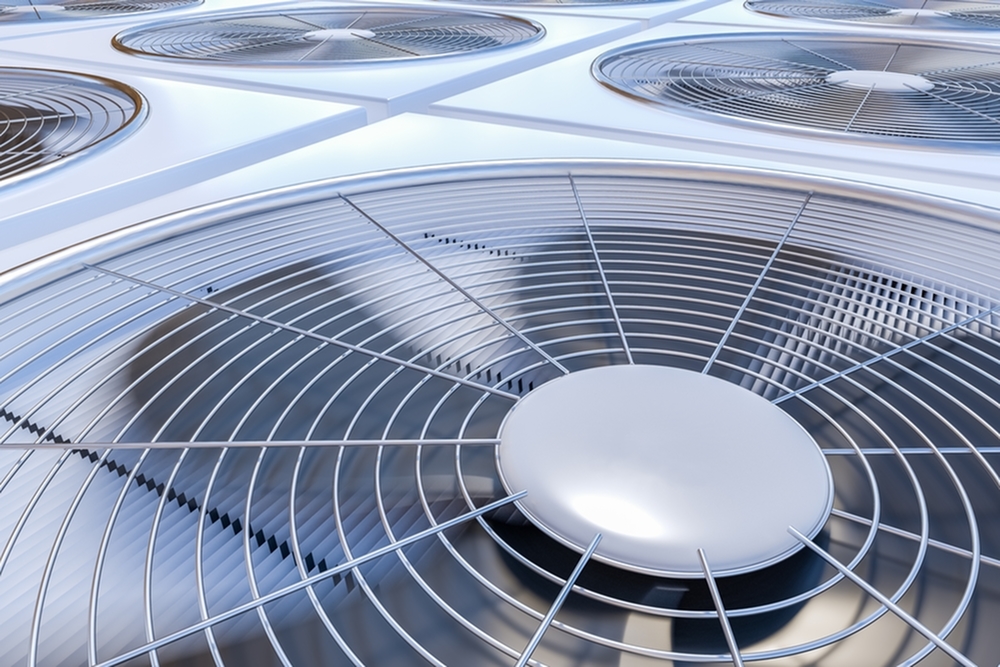
When the hot, humid air rolls in each summer, can your HVAC unit handle the heat and keep you cool? What many homeowners and property managers do not realize is that their air conditioner may not actually be operating optimally. Below is a primer in HVAC care, with some easy fixes that will help your unit run smoothly all summer long. Get to Know Your A/C Let’s start with a crash course about how your air conditioner works. Your AC comprises two parts: the condenser unit, which sits outside, and the evaporator unit, which is found indoors. Together, these components remove heat and moisture from the air through refrigeration technology. The air handler then blows the dehumidified and chilled air through the ductwork of your home. Before You Begin Some of the repairs necessary to keep your unit running smoothly should be handled by a licensed professional. For example, anything pertaining to the sealed refrigeration system is  not  a DIY job. There are also important safety precautions to note before you begin: always turn off the power to the condenser at the service panel. If your unit has a weatherproof disconnect box, turn this off, too. And the furnace often has an additional circuit breaker in the main electrical cabinet that you need to turn off.  If you have any questions about whether you have completely shut off the power to your unit, do not make any repairs. Call a professional. Tips for HVAC Care: 1.   Test your system early and beat the rush.  We recommend doing all of the suggested repairs listed below and testing your AC  before  temperatures start to climb. If you wait until summer is in full swing, you may be last in a long line of other customers who also just discovered their AC unit wasn’t working. The peak season for air conditioner repairs runs from late spring through early summer, so if you wait until then, it could be days or even weeks before your unit can be serviced. 2. Change the filters.  The air filter’s job is to catch the dirt, dust and particles that flow through your system. It doesn’t take long for those particles to build up, requiring your system to work harder to force air through, which translates to a less efficient system. That’s why it’s imperative to change the filters as often as is recommended by your HVAC’s manufacturer. 3. Clean your unit.   Sometimes all you need to help your HVAC unit run more efficiently is a little elbow grease. Remove debris and moisture from the base of your condenser. Give the fan blades a wipe down with a cloth. Add the manufacturer-recommended oil to the fan motor’s oil ports. And remove any debris that obstructs airflow through the condenser unit. 4. Clear the condenser coils.  Unscrew and remove the side and top panels from the condenser. Use a refrigerator comb to gently clean the coils, being careful not to bend them. 5. Protect the coolant lines.  The tubes between the evaporator to the condenser are usually covered with insulation to preserve energy. If any insulation is missing, replace it by installing a foam insulation sleeve or insulation tape. 6. Check the age of your HVAC unit.   Almost half of the energy use in a typical American home comes from running the heating and air conditioning. As the system ages, it becomes less efficient and, therefore, more costly. If your unit is more than 15 years old, consider upgrading to a new, energy-efficient model. Follow these easy tips every spring to guarantee a cool summer. And remember, always call a licensed professional for repairs, unless you are absolutely sure that you know what you’re doing!

Read more
Building Smarter Buildings-image

The day to day demands of a property manager’s job are many: Nancy is cold again!   Quick, go fix that heater! The toilet is stopped in the accounting department!   Oh no! Gotta check that plumbing! There is another leak in the roof over the lobby!   Really? Time for another patch! This non-stop barrage of daily demands makes it really tough for property managers to prioritize long-term strategies for extending a building’s life, over quelling the “tyranny of the urgent.” But insisting on high-performance strategies and best practices can improve the efficiency of the entire building  (and radically improve a property manager’s quality of life) . In fact, by developing long-term strategies that keep all of a building’s many systems operating optimally, property managers can actually  reduce  the number of “urgent” requests that pop up and need to be attended to…quick! WPM’s President of Commercial Management and Construction Services, Mike Klein, asserts that a robust and proactive preventative maintenance program is the key to extending a building’s life. He describes the three levels of building care: 1. Reactive : As equipment and systems break, they are replaced or fixed 2. Preventative : The building’s many elements are regularly serviced to extend their lives and maintain efficiency 3. Proactive : Building equipment is replaced  before  it breaks or becomes inefficient “At WPM we believe that maintaining a high performance building requires proactive care, with a good dose of preventative maintenance mixed in,” Klein explains. “It may seem obvious that preventative building care is essential. But often, long-term planning falls by the wayside when things get hurried. It takes discipline to focus on a building’s future. But that is truly the best practice and what distinguishes successful managers. With a balanced approach to building management, property managers can add real value.”

Read more
Invest in Your Roof-image

  One of the most important activities property managers and maintenance superintendents can perform to protect commercial and large residential facilities is a  regular and thorough inspection of their facilities’ roofing systems. Regular, scheduled inspections and routine maintenance can be the difference between a roof that meets or exceeds its rated service life and one that fails prematurely. It will also keep you within your warranty. But the benefits of roof inspections don’t end there. Inspection programs can also reduce the need for emergency repairs, limit damage to the building’s structure and interior, and reduce the risk of an unhealthy living environment for occupants. In most cases, workers should inspect roofs twice each year: once in the fall and once in the spring. The fall inspection helps identify defects that might have developed during the summer, when roofing components undergo high thermal stresses and exposure to prolonged ultraviolet (UV) light. Similarly, the spring inspection identifies defects caused by ice and snow accumulation or shrinkage caused by low temperatures. Staff should perform additional inspections following heavy storms or high winds. The details of the roof inspection program vary with the type of roof and its exposure. Roofs with high levels of foot traffic or concentrations of mechanical equipment require inspectors to look more closely for physical damage to the membrane. Built-up roofs have different inspection requirements than single-ply, metal or vegetative roofs. Despite the differences, these common trouble spots can develop in practically any type of roof: A clogged or restricted drainage system.  Debris, such as leaves and construction materials, can build up in or around roof drains. Restricting the flow of water from the roof can cause ponding or allow water to back up under the roof’s protective membrane. Your staff should regularly clear all roof drains and keep the roof free of debris that could eventually make its way into drains. Ponding water on the roof.  Prolonged exposure to water can accelerate the breakdown of some roofing materials. The weight of the water standing on the roof can also compress the roof’s insulation, increasing the depth and width of the ponding and causing even more standing water. Exhaust system damage.  Inspections also should include a check of building exhaust systems, which often vent through a building’s roof and directly onto the roof surface. Depending on the interior operation the exhaust system serves, these fumes can cause significant damage to the roof membrane. Built-up roofs consist of several layers of reinforcing materials embedded in waterproofing materials. A coating of gravel, granules, or a reflective coating protects the top surface from UV light. Common problems with these systems include: Alligatoring . A series of small cracks can develop in the roof’s surface as the result of shrinkage of the asphalt material. As the problem develops, it looks like dried mud or alligator skin. Left uncorrected, the cracks will grow into splits in the membrane. Blisters . These soft bubbles form in the roof’s membrane due to moisture trapped underneath. They can be as small as a dime or up to several feet across. Bubbles are most noticeable on hot days and can be easily broken by foot traffic. Ridges . These result from two main causes—thermal expansion of the roofing material and separation of the underlying insulation from the roof deck. The stress in the ridge eventually becomes sufficient to tear the roofing materials.   It is important to keep a log book or computer file of photographs and notes taken with each inspection. You should also have the repairs done by a roofing contractor certified by the membrane’s manufacturer – and then photograph the finished repair. If you are not comfortable making the inspections, WPM recommends having an independent inspector from a roofing contractor. These recommendations will help maintain your roof’s warranty and prolong its life, saving you lots of money in the long-run. Remember, an investment in your roof is money well spent.

Read more
Are You a Snowbird?-image

Tips for Winterizing Your Home Every year, as autumn’s Technicolor brilliance fades into winter’s gray and white, a great migration occurs: “Snowbirds” head south for the winter! And if you’re among these sun-seeking (mostly) retirees, you know that preparing your home for its “hibernation” takes preparation. Here are some tips for winterizing your home, so that it can weather the cold months ahead and welcome you back again, in the spring. Protect Your Pipes WPM President of Commercial Management and Construction Services, Mike Klein, advises you to completely turn off all water-using systems. This includes the washing machine, dishwasher, hot water tank and ice maker. You may also consider having your water supply completely turned off. If, however, you opt to keep your water supply on, be certain to leave your furnace on so that your home’s plumbing remains relatively warm to keep pipes from freezing and bursting. “I strongly advise residents to set their home’s temperature no lower than 60 degrees,” says Klein. “I have experience with many residents who set the thermostat at 40 or 50 degrees, thinking that they were saving money and energy. Their homes’ pipes ended up getting too cold and burst, causing a great deal of damage.” Other safeguards to consider for your plumbing are a water flow sensor and a low-temperature sensor. These sensors can relay information to a 24-hour alarm center or can even be monitored right on your smart phone. An alarm notifies you about freezing pipes in time to do something about them, before the problem becomes far more costly. Protect Your Home A vacant home is a vulnerable home. Burglars and vandals are keen to the signs that show that no one is home. That’s why it’s key to make sure that your home looks continuously occupied. First, make sure to address obvious signs that the home is vacant: stop all mail and newspaper deliveries. Contract with a snow removal company to clear your sidewalk and driveway whenever it snows. Klein also suggests programming several of your interior house lights with five-position auto-timers, to turn lights on and off throughout the day, giving your home the illusion of continuous residence. A good alarm system and sturdy door dead bolts are also essential for safeguarding an unoccupied home. Before you leave town, be certain to test that all alarm systems are functioning and have been activated. Perform Routine Maintenance Murphy’s Law states that anything that can go wrong, will go wrong. That’s a good adage to remember when preparing to leave your home! Help your home avoid unforeseen issues by proactively performing routine maintenance. Have your furnace inspected and serviced before you leave. Ensure that your electrical system is functioning properly. Remove dead trees or low-hanging branches that are near your home. Clear the gutters and drains of debris to reduce snow and ice build-up. Replace the batteries on all smoke detectors. If you’ve been putting off small house projects, tackle them before you leave for the winter. Prepare for Emergencies No matter how carefully you protect and maintain your home, emergencies may still arise. These can range from catastrophes—such as fires, burst water pipes, flooding, fallen trees and natural weather disasters—to less urgent mishaps. Klein advises homeowners to designate a trusted friend or neighbor, or to hire a property management company, to be your onsite contact. Give them access to your home, so that they can regularly monitor its heating, electrical and water systems. With their help and your careful preparation, your home will be waiting for you, as you left it, when you migrate northward once again.

Read more