Blog Posts

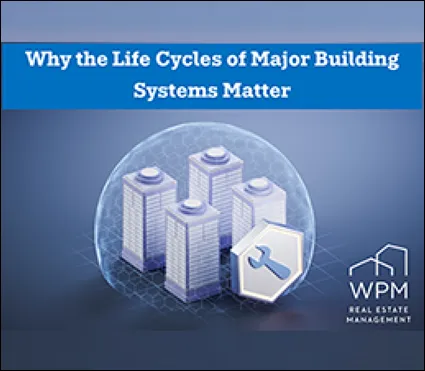
Why the Life Cycles of Major Building Systems Matter-image

Roofs, boilers, HVAC systems, plumbing infrastructure, pools, access control systems, and other major building components are easy to take for granted when they are working properly. But when one of these systems fails, the impact can be significant.   A leaking roof can cause interior damage. A boiler or hot water system failure can disrupt residents. An aging HVAC system can affect comfort, efficiency, and operating costs. A failing pool, outdated fitness center, or aging amenity can shape how residents, homeowners, and prospective renters experience the community.   These systems also come with real costs. Major components can range from tens of thousands of dollars to several hundred thousand dollars. When those expenses are anticipated, owners and boards have more options. When they are not, decisions often have to be made quickly, under pressure, and with fewer choices.   From Reactive Repairs to Proactive Planning Every major building component has a useful life. The question is not whether a roof, boiler, chiller, or access system will eventually need repair or replacement. The question is whether the property team, owner, or board understands where that system is in its life cycle and has a plan for what comes next.   A proactive approach allows property owners and Association boards to look ahead, prioritize needs, and make more informed decisions. Instead of responding only when something breaks, they can assess current conditions, estimate remaining useful life, evaluate options, and plan for future work.   That planning matters because emergency repairs are rarely ideal. When a system fails unexpectedly, the immediate need is often to restore service as quickly as possible. That can mean paying a premium, accepting whatever equipment or materials are available, or delaying other planned work to fund the emergency.   Proactive planning reduces the likelihood of being caught off guard.   Protecting Financial Performance and Property Value For multifamily owners, major building systems are directly connected to both asset value and financial performance. A property that is well maintained is better positioned to operate efficiently, support resident satisfaction, and protect long-term value.   For Association boards, the same principles apply in a different financial structure. Boards are responsible for protecting the community’s common elements and preserving the value of homes in the community. When major expenses are not properly anticipated, the financial burden may show up through reserve funding challenges, fee increases, special assessments, or delayed projects.   Reserve studies are an important planning tool for Associations. They help identify major common-area components, estimate future costs, and support responsible long-term funding. But a reserve study is only one part of the process. Boards also need practical guidance to translate that information into action: What needs to happen first? Are the cost estimates still realistic? What should be repaired, replaced, or monitored? What vendors are needed? How should the project be scoped, bid, scheduled, and managed?   That is where experienced management and construction support can add significant value.   Looking Beyond the Obvious Systems When people think about major building systems, they often think first about roofs, HVAC, plumbing, boilers, chillers, siding, brick, gutters, and other visible or mechanical components. Those are all important. But a comprehensive life cycle approach may also include amenities and property features that influence the resident or homeowner experience.   Pools, fitness centers, laundry rooms, clubhouses, dog parks, access control systems, call boxes, fencing, lighting, and other shared features all require ongoing maintenance, eventual replacement, or periodic upgrades. Understanding the condition and priority of these components helps owners and boards make better decisions about where to invest first. A replacement project may need to be phased over several years to align with funding.   The Role of Expertise Effective life cycle planning requires more than a checklist. It requires knowledge of building systems, construction management, vendor coordination, budgeting, operations, and the realities of maintaining occupied properties and active communities.   WPM’s Maintenance & Construction Services team brings that perspective to help clients think more proactively about their properties. On the multifamily side, WPM’s ISSEE program, which stands for Inspection of Safety Systems, Envelope and Environment, is one example of how the team documents key systems and components, assesses condition, and helps clients better understand future needs.   For Associations, WPM’s expertise can help boards take the information in a reserve study and turn it into a practical plan. That may include reviewing priorities, developing scopes of work, obtaining vendor input, refining budgets, coordinating bids, and helping oversee projects.   Planning Today for Tomorrow’s Needs Major building systems will always require investment. The difference is whether those investments are planned, prioritized, and aligned with the goals of the property or community.   By understanding the life cycle of key components, owners and boards can better manage costs, protect property value, reduce disruption, and make decisions with greater confidence. Working with a management partner that understands building systems, budgeting, and project execution can help turn long-term needs into actionable plans.   That proactive approach is not just good maintenance. It is a smarter way to protect the asset, support the people who live there, and create performance that adds value.

Read more
Why Online Reputation is Your Most Critical Asset-image

  How Online Reputation Impacts Leasing Performance   Prospective residents often form an opinion about an apartment community long before they contact the leasing office or schedule a tour. In many cases, their first impression comes from a Google search, a star rating, recent reviews, and the way the management team responds.   That means online reputation is no longer just a marketing issue. It is directly connected to lead volume, tour conversion, resident trust, and overall leasing performance. A community’s online presence tells the story of the resident experience, and that story can either build confidence or create hesitation.   Star Ratings Shape First Impressions For many prospects, star ratings are an early filter. Before clicking into a community’s website or submitting a lead form, they may compare ratings across properties and quickly narrow their search.   But reputation management is not only about maintaining a high score. It is also about showing consistent, recent feedback that reflects how the community is operating today. Older reviews may still influence perception, but current reviews help tell a more relevant story and balance the occasional negative review every community is likely to receive.   How You Respond Matters, Too Prospects do not just read reviews. They also read management responses. A thoughtful, professional response shows that the team is engaged, accountable, and paying attention. Not all concerns can be fully resolved in a public forum, but the response itself can influence how future prospects perceive the community.   Responses should not sound scripted or defensive. They should be specific, respectful, and, when appropriate, invite the resident to continue the conversation offline. In many cases, a prospect may judge the response as much as, or more than, the original complaint.   Negative Reviews Are Part of the Process Every community receives negative reviews at some point. The goal is not perfection. The goal is consistency, responsiveness, and operational follow-through. One negative review is usually less damaging than a pattern of ignored reviews or repeated concerns that appear unresolved.   When negative feedback reveals a recurring issue, it should be treated as an opportunity to look more closely at the resident experience. Used well, online feedback becomes more than a reputation tool. It becomes an operational insight, helping teams identify maintenance concerns, communication gaps, staffing challenges, or broader resident experience trends.   Reputation Is Built Through Everyday Operations At the core, online reputation is built through the daily experiences residents have with the community. Positive reviews are often tied to simple but meaningful regular interactions, such as: Responsive maintenance Friendly and helpful communication Smooth move-ins Clear follow-up after concerns are addressed Positive resident events and appreciation activities Team members who make residents feel heard and valued   For WPM communities, reputation management is closely connected to the everyday customer service experience. When residents have positive interactions, they are more likely to share them publicly.   Making Reputation Management Part of the Culture A strong reputation requires ongoing attention and team-wide accountability for excellence in customer service, from responding to maintenance requests to communicating regularly with residents.   At WPM, online reputation performance is monitored across apartment communities through a centralized Reputation Report Card. This allows teams to track Google ratings, review volume, review trends, response completion, and overall reputation performance over time. By reviewing reputation data regularly, managers can identify opportunities early and respond proactively. WPM also encourages teams to request reviews during positive resident touchpoints, helping prospective residents see a more current and complete picture of the community experience.     Training Teams to Support Reputation and Performance Reputation management works best when everyone understands their role. WPM provides training and support for leasing teams, service teams, property managers, and regional managers, with a focus on best practices for responses to reviews, resident communication, online reputation trends, and the connection between everyday interactions and leasing performance.   The emphasis is not on eliminating all negative feedback. Instead, the focus is on timely responses, clear communication, operational follow-through, and a steady flow of authentic positive reviews.   A Strong Reputation Starts with the Resident Experience Online reputation reflects what residents experience every day. When teams communicate clearly, respond promptly, follow through on concerns, and create positive moments of connection, residents are more likely to share those experiences.   At WPM, we know reputation management is not about shortcuts or quick fixes. It is earned through consistent, authentic service that adds value for residents, clients, and communities. When the service is strong, the online perception aligns with the lived experience. That is the foundation of performance that adds value.  

Read more
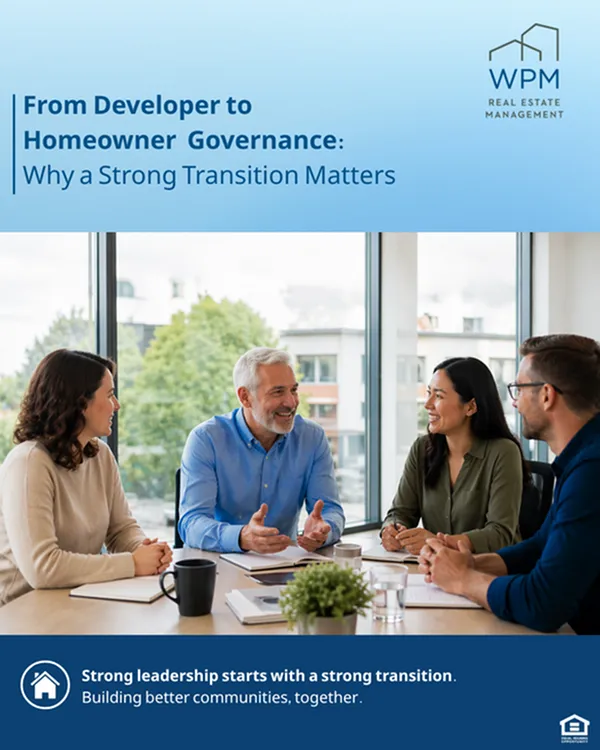
From Developer to Homeowner Governance: Why a Strong Transition Matters-image

In every community association, there is a point where the focus shifts. The developer steps back. Homeowners step forward. And a new Board takes on the responsibility of leading the community.   It is easy to think of this as a procedural milestone. In reality, it is one of the most important moments in the life of the community—and one that has lasting implications well beyond the transition itself.   What Really Happens at Transition   This transition is not simply a handoff of control. It is a shift in responsibility for: Financial decisions, including budgets, reserves, and long-term planning Operational oversight for maintenance and care of shared assets Governance, communication, and accountability to homeowners   At the same time, there is a new dynamic as volunteer Board members step into roles that require understanding budgets, contracts, and governance responsibilities. Homeowners begin to gain insight into how their community operates. And developers are focused on closing out a project that will carry their name and reputation forward. How this moment is managed matters.   Setting the Foundation   While every community is different, a few core elements consistently shape a successful transition:   Financial clarity . Understanding operating budgets, reserve funding, and any developer contributions helps avoid surprises later. Gaps identified early are far easier to address than those discovered after the fact that may require special assessments or deferred maintenance.   Physical condition of the property . A clear understanding and documentation of the condition of common areas, including any potential issues, helps protect the association’s ability to address concerns before the handoff. Missing problems during this window can limit the association’s ability to fix development issues later.   Legal and Governance Structure. Complete and accurate governing documents, contracts, warranties, and financials need to be accessible and clearly understood. In some cases, these may even need to be refined to reflect how the community will operate long term. Missing or incomplete information can slow decision-making and create unnecessary risk for the community.   Homeowner Trust and Engagement. For many homeowners, this is their first real exposure to how a community association functions. Ensuring new Board members understand their role and the decisions they may be facing is critical. Combined with clear communication and transparency, this builds confidence and encourages engagement across the community. When these elements are aligned, the community is positioned for stability. When they are not, Boards often spend their early years reacting rather than leading.   The Role of Thoughtful Guidance   One of the most consistent factors in successful transitions is experienced guidance throughout the process. A strong community management partner helps bridge the gap between development and long-term community-managed operations by: Keeping the process organized and on track Coordinating across developers, engineers, legal, and financial professionals Providing clear, practical guidance to Board members Helping identify risks early, when they can still be addressed   Just as importantly, a good community manager helps both sides navigate the transition successfully. For developers, that means ensuring the community is set up in a way that reflects well on the project and supports long-term performance. For Boards and homeowners, it means starting from a place of understanding rather than uncertainty.   Timing and Why Starting Early Can Make a Difference   The transition of community governance from developer to homeowners is determined by a combination of state statutes, governing documents, and the association’s recorded declaration. It is typically triggered by a percentage of units sold or a specific date outlined in the governing documents.   In reality, the most successful transitions start well before that point. Early preparation and guidance from an experienced community manager allows for: Organized documentation and recordkeeping Clear expectations between developers and future Boards Time to identify and address financial or physical concerns More thoughtful onboarding of homeowner leadership   It also creates a more collaborative environment, rather than one driven by deadlines or pressure.   A Springboard for Success   The transition from a new development to homeowner leadership is not the end of a process. It is the beginning of owner-led governance. It is also a complex and high-stakes responsibility.   The most successful communities embrace it as an opportunity. It’s a chance to take ownership of how their community operates—from establishing strong governance and realistic financial expectations, to building trust and transparency that positions the community for long-term stability. Ultimately, it becomes the moment that sets the tone for everything that follows.   With the right preparation and guidance, strong transitions position the association for future success and help turn a development into a thriving community. 

Read more
Spring Property Inspections: How Proactive Management Protects Communities-image

As winter gives way to spring, property managers have an important responsibility to take a fresh look at the communities in their care. Months of snow, freezing temperatures, and winter storms can quietly create issues that may not be immediately visible.   At WPM, this seasonal transition is a natural point in the annual management cycle to evaluate how each community has weathered the winter months and identify what needs attention before the busy spring and summer seasons begin. Taking this proactive approach helps protect the condition and long-term value of the community.   Conducting a Comprehensive Walk-Through WPM’s property managers and on-site maintenance teams begin with a thorough walk-through of each community. Using structured inspection checklists developed through years of experience, teams systematically evaluate the condition of the community and identify areas that may need attention.   These inspections typically include reviewing: Building exteriors, siding, and windows Parking areas, curbs, and sidewalks Lighting and community signage Landscaping and drainage areas Community infrastructure such as fencing, railings, and retaining walls Common areas and outdoor amenities, such as dog parks, walking paths, and playgrounds   For both multifamily properties and association communities, this walk-through provides a clear picture of the property’s condition and helps identify priorities for the months ahead.   Addressing Winter Damage Early Once temperatures rise, WPM teams often discover issues that emerged over the winter months. Snow removal equipment, freezing temperatures, and ice buildup can create wear and tear that only becomes visible as conditions improve.   Inspections frequently uncover issues such as clogged gutters, cracked concrete, landscaping damage, or loose exterior components. Addressing these items early helps protect what property professionals refer to as the building envelope—the exterior elements that keep water and weather out of a structure. Even small issues, such as blocked gutters or failed window sealing, can allow water intrusion and lead to more significant repairs if left unchecked.   Preparing Systems and Infrastructure for the Season Spring is also the time to ensure mechanical systems and infrastructure are ready for the months ahead. Before summer temperatures arrive, WPM teams begin testing and servicing air conditioning systems and other equipment so potential issues can be resolved before peak demand.   Seasonal preparation often includes: Starting up air conditioning systems Cleaning coils and replacing filters Inspecting drainage lines and condensate systems Testing equipment performance   At the same time, teams review other infrastructure that supports daily operations, including lighting systems, storm drains, fire hydrants, walkways, and playground equipment.   Water management is a particular focus during this time of year. Clearing debris from storm drains and drainage areas helps ensure water flows properly during spring rains and reduces the risk of flooding or property damage.   Maintaining Safety and Community Appearance Spring inspections also provide an opportunity to address safety concerns and refresh the community after the winter months.   Typical focus areas include: Repairing fencing or exterior features Painting curbs or signage Power washing common areas Preparing pools and outdoor amenities Refreshing landscaping and planting areas   These efforts help ensure the community is welcoming, safe, and well cared for as residents spend more time outdoors during the warmer months.   Turning Inspections into Action A spring inspection is only valuable if it leads to action.   Once issues are identified, WPM teams prioritize them based on safety, potential property damage, and seasonal timing. From there, a maintenance plan is developed that may involve on-site maintenance teams, WPM’s in-house Maintenance & Construction Services division, or trusted vendors and specialized contractors. Having these capabilities available ensures work is coordinated efficiently and completed by experienced professionals.   Taking this proactive approach reflects the mindset WPM brings to every community we manage. We treat each property with the same care and attention we would expect if it were our own. It’s part of our commitment to protecting the communities entrusted to us and delivering performance that adds value.

Read more
What Multifamily Owners Need to Know About Lead-Based Paint Disclosure-image

For owners of multifamily properties, regulatory requirements are part of the cost of doing business. Many are familiar, some are complex, and most require consistent execution to avoid unnecessary risk. Lead-based paint disclosure is one of those requirements where doing it right, every time, matters.   In established multifamily markets, a significant portion of housing stock predates 1978. Federal and state regulations require owners of most of these properties to disclose known information about lead-based paint and related hazards before a lease is signed. While the disclosure process itself is well-defined, the risk for owners typically lies not in the rule but in how it is managed day to day.   Disclosure as a risk management issue Lead disclosure requirements exist to reduce risk for both residents and for owners. From an ownership perspective, the exposure is primarily legal and financial. Federal law allows for significant penalties when required disclosures are missed or improperly handled, and enforcement actions often focus on documentation, timing, and record retention rather than intent.   In practice, disclosure-related issues tend to surface in predictable moments: audits, complaints, legal review, or ownership transitions. Inconsistent processes across a portfolio, incomplete records, or informal leasing practices can create gaps that are difficult to correct after the fact.   For owners, the key takeaway is straightforward: disclosure is not a one-time administrative task. It is an operational control that needs to function reliably across properties and leasing teams.   What owners should understand at a practical level At a high level, lead disclosure requirements are built around a few core expectations: Disclosure must occur before lease execution, and timing matters. Known information must be shared, including existing reports or records, where applicable. Acknowledgment and documentation are critical and must be retained for defined periods. Processes must be repeatable across units, properties, and markets.   State-specific requirements may add additional obligations, particularly for properties located in jurisdictions with more detailed lead paint laws. Owners operating across multiple states benefit from an approach that accounts for these variations without relying on ad hoc judgment at the site level.   Where risk tends to show up From an owner-risk standpoint, disclosure issues most often arise not because requirements are unknown, but because execution breaks down, particularly as portfolios grow, teams change, or processes evolve.   Common pressure points include: Leasing teams working from outdated forms Disclosure materials not being provided uniformly across properties Records that are incomplete or difficult to retrieve Growth or turnover that outpaces process updates   These gaps can increase exposure even for otherwise diligent owners. The operational challenge is ensuring that disclosure is embedded into leasing workflows in a way that holds up over time.     LEAD DISCLOSURE: COMMON MISCONCEPTIONS   Disclosure does not automatically require testing. It focuses on sharing known information and required materials, not creating new reports. Disclosure does not signal that a property is unsafe. Many well-managed, older communities comply fully with disclosure requirements. Disclosure is not a one-size-fits-all. Requirements may vary by state and sometimes by property type or tenancy circumstances. Disclosure works best when it is part of the leasing process. Treating it as an afterthought is where risk tends to surface. Transparency builds trust Disclosure is not a warning sign for residents, but rather information. Residents who receive clear, timely disclosures are less likely to assume information is being withheld or minimized. Clear, timely disclosure helps set expectations and reduces misunderstandings at the outset of the lease.     This transparency often translates into smoother leasing, stronger resident relationships, and fewer disputes. But its primary value remains risk reduction and consistency.   The role of a disciplined management approach For many owners, the challenge isn’t understanding that disclosure is required; it’s managing the details consistently across properties, teams, and jurisdictions. That’s where the right property management partner adds value.   Effective managers treat disclosure as part of routine operations, not a standalone task. They act as a guide, helping owners understand what matters, where risk tends to surface, and how to maintain alignment without overcomplicating the process. That means: Monitoring regulatory changes so owners are not caught off guard Creating consistency across properties and leasing teams Maintaining documentation that is accessible, complete, and defensible   This disciplined approach reduces friction during audits, legal review, or ownership changes and helps protect owners from avoidable exposure.   A quiet but important differentiator Lead paint disclosure may never be a headline issue for most multifamily properties, but it remains an important part of responsible ownership. Consistent, well-documented disclosure processes reduce liability and support operational stability.   Done well, disclosure also builds confidence: confidence for owners that the details are being handled thoughtfully, and confidence for residents that they are renting in a professionally managed community.   Owners reviewing disclosure processes across their portfolios may benefit from a structured compliance review to ensure consistency across markets. Contact WPM to discuss how we help owners manage compliance with a disciplined, repeatable approach.

Read more
Start the Year Strong: A 10-Point Checklist for Community Association Boards-image

A new year is the perfect opportunity for Community Associations to reset, refocus, and plan ahead. Whether your association is a condominium, HOA, or master association, the work you do early in the year helps set the tone for smoother operations, clearer communication, and stronger financial stewardship.   At WPM Real Estate Management , we partner with Boards to bring structure, guidance, and hands-on support so communities can move confidently into the year ahead. Use this Top 10 Checklist to help your community start the new year off strong.   The Top 10 Checklist   Review goals and priorities. Revisit last year’s goals and confirm what matters most this year, from capital projects to communication and financial stability. Approve and understand the budget. Ensure all Board members are aligned on assessments, reserve contributions, and the major expense categories driving the budget. Examine reserve funding and long-term planning. Confirm reserve assumptions and timelines so the community is positioned for major repairs and replacements. Confirm Board roles and communication protocols. Clarify responsibilities, decision-making pathways, and how communication flows between the Board and management. Set an annual calendar for meetings and key dates. Establish meeting cadence, annual meeting timing, budget milestones, and key community touchpoints. Evaluate vendor relationships and performance. Review current contracts and service expectations and confirm vendors are aligned with community needs. Plan for preventive maintenance. Prioritize inspections and routine maintenance to reduce emergencies and extend the life of common building components and amenities. Commit to clear, consistent owner communication. Share what is happening, what is changing, and why, so owners stay connected and trust remains strong. Stay informed on legal and regulatory requirements. Keep the Board current on compliance requirements and changing laws that affect the community. Invest in training and support for Board members. Provide resources that help volunteer leaders understand their role, feel confident and make sound decisions.   How WPM Helps Boards Start the Year Strong   Many Boards start the year with good intentions, but without a clear plan, the year can quickly become reactive. Our role is to help Boards build a strong foundation early so they can manage with confidence and consistency all year long.   Here is how we typically approach the start of the year with association clients:   Align on priorities and how decisions get made. We help Boards clarify goals, confirm roles, and establish communication protocols so work stays organized and decisions stay efficient. Establish a steady rhythm for financial oversight. We prepare detailed budgets, review financials with Boards in plain language, and support ongoing budget-to-actual review so decisions are informed and transparent. Support reserve and capital planning. We coordinate with reserve specialists, monitor funding levels, and help Boards plan for upcoming capital needs while balancing cash flow and long-term value. Strengthen vendor accountability. We help review contracts, manage vendor performance, and support preventive maintenance planning. Our managers help develop maintenance schedules and coordinate inspections, so issues are addressed before they escalate. Keep the community informed and the Board supported. We help Boards communicate clearly with owners, stay current on regulatory requirements, and gain access to the training and resources they need as volunteer leaders. We also assist with newsletters, notices, portals, and meeting communication to keep owners informed and engaged.     When these pieces are in place early, communities tend to experience fewer surprises, clearer decisions, smoother communication, and better overall performance as the year progresses.   A successful year does not happen by accident. It takes planning, consistent communication, and the right professional support. At WPM Real Estate Management, we pride ourselves on being trusted advisors to our community clients, helping Boards navigate challenges, plan strategically, and focus on what matters most.   Want a strong start to 2026? Schedule a New Year Planning Session with our team to review priorities, confirm key dates, and set a clear path for the year ahead.

Read more